
Last updated September 10, 2026
Full 25-point door and opener safety check with every visit - springs, cables, rollers, tracks, and your LiftMaster or Chamberlain opener included
You get a price before we start. It does not change when the truck arrives.
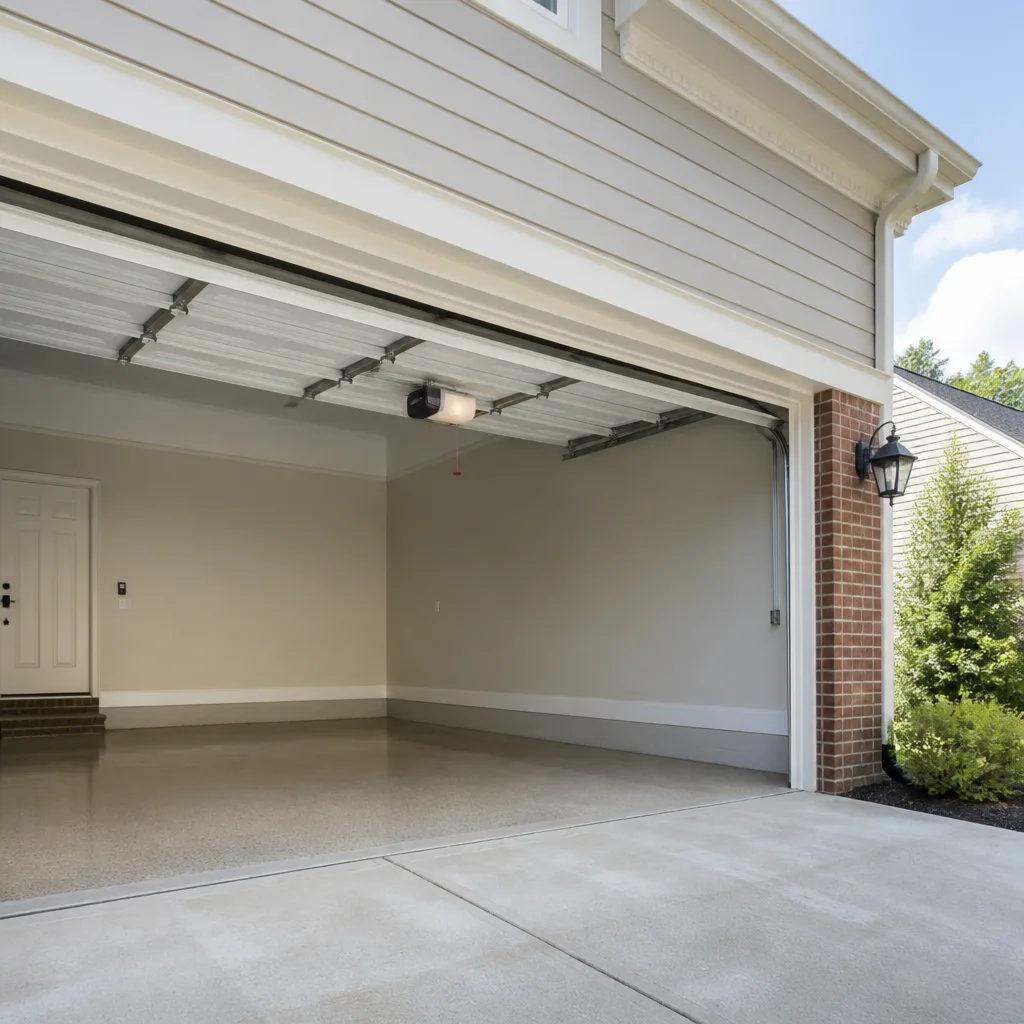
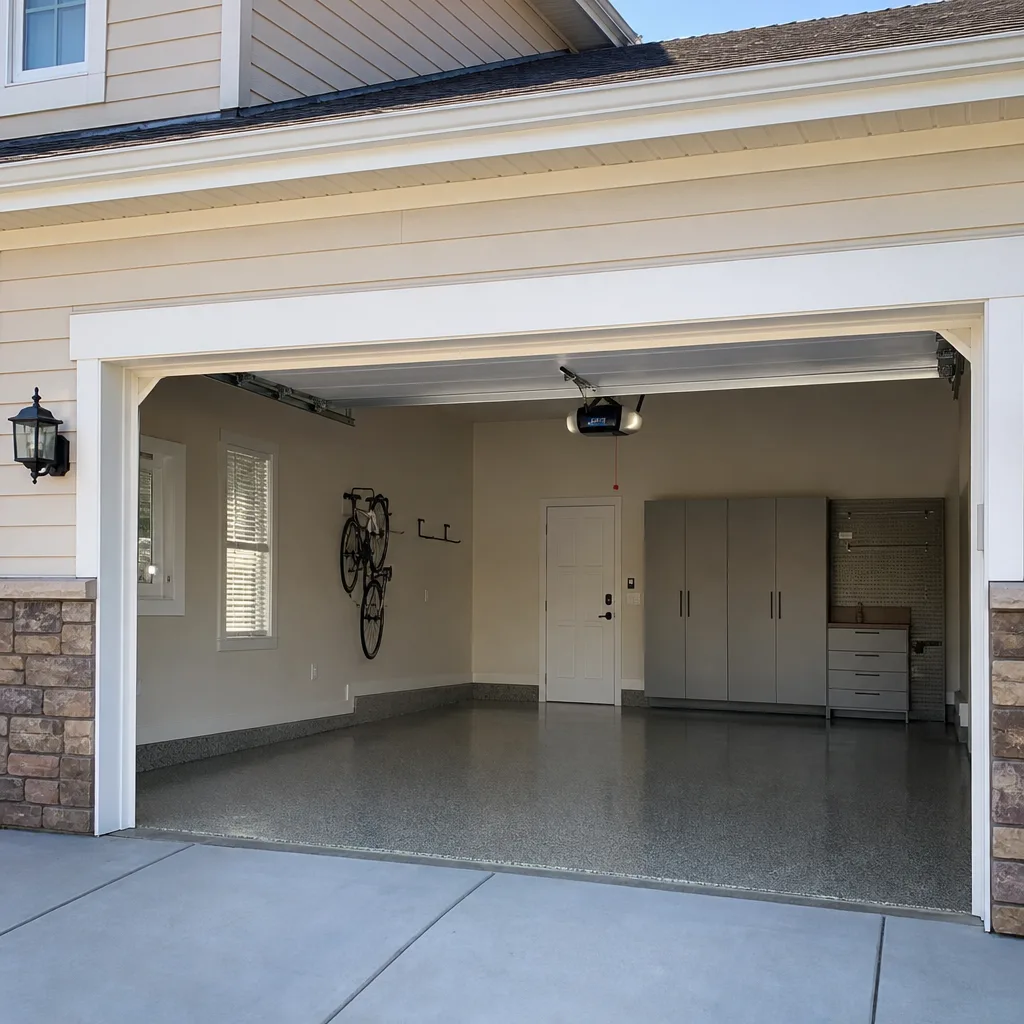
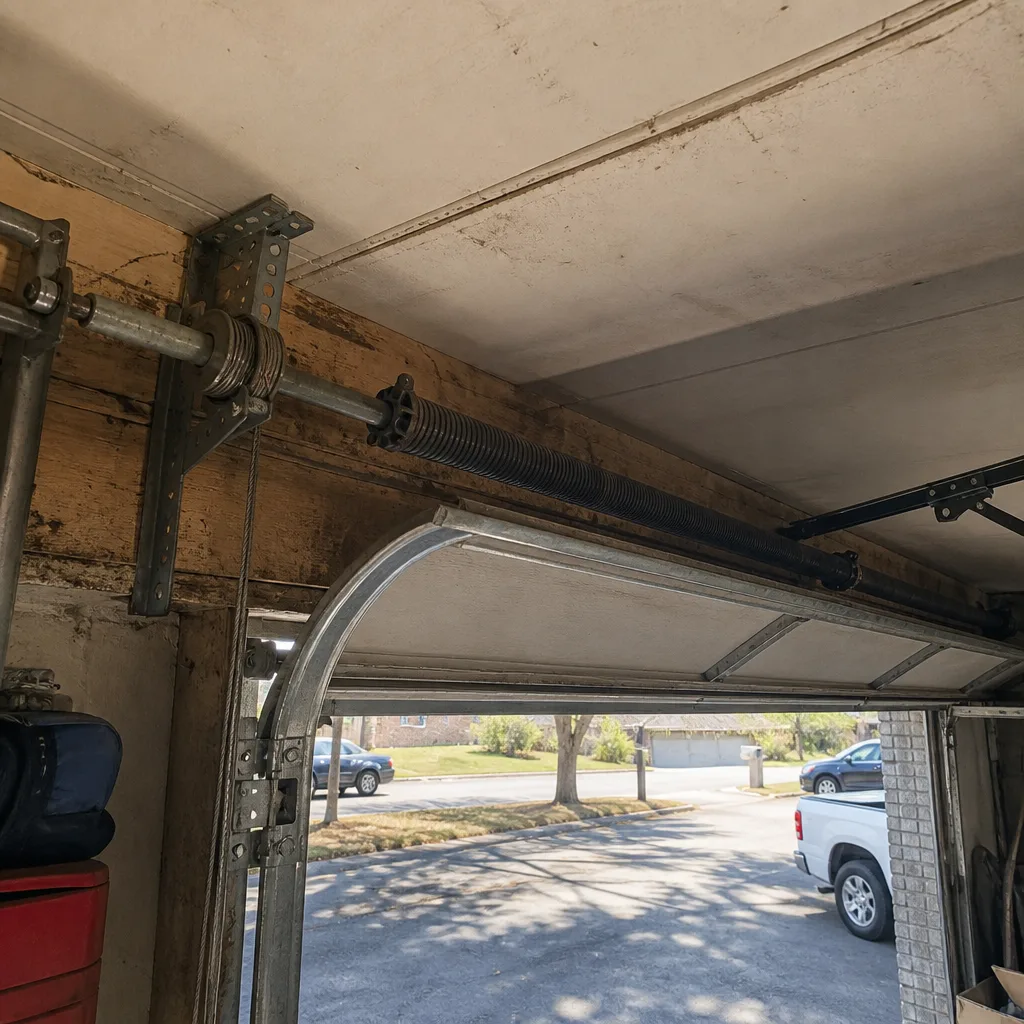 Before
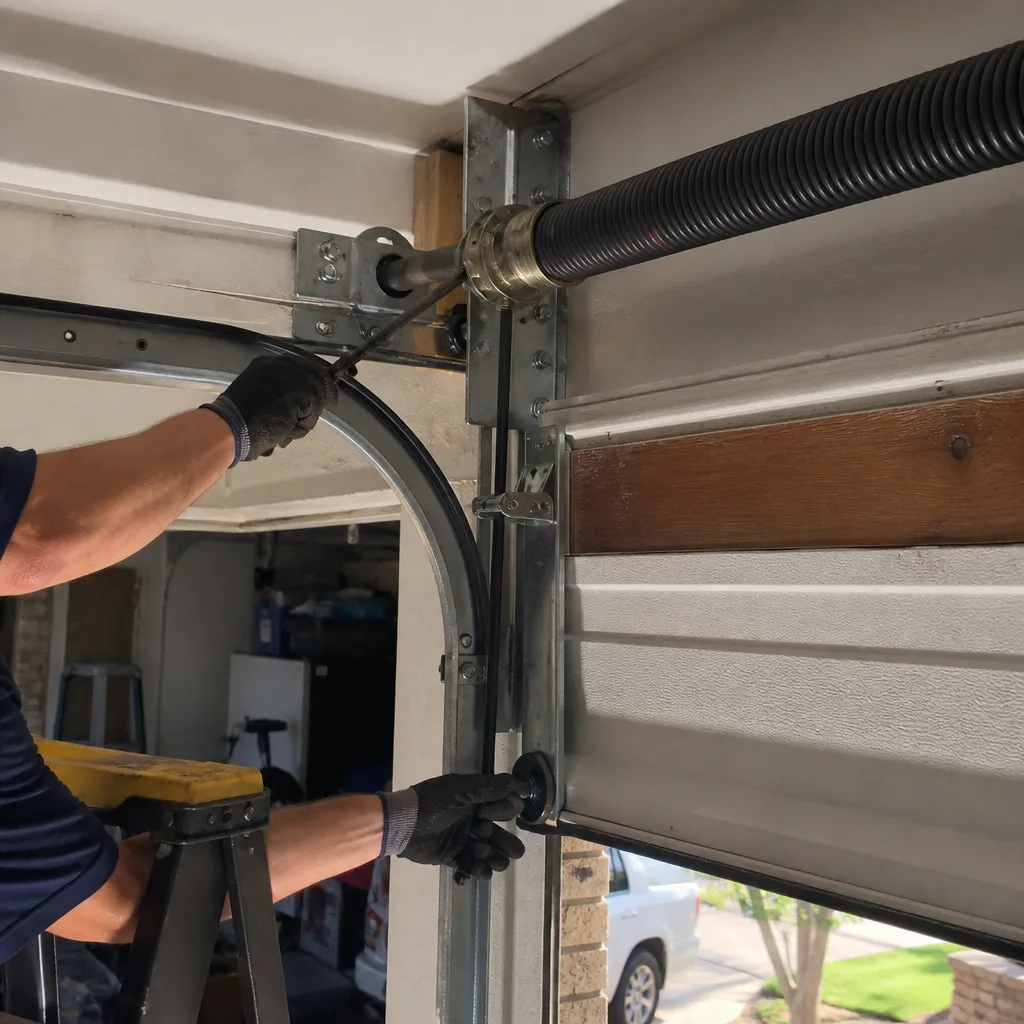 After
After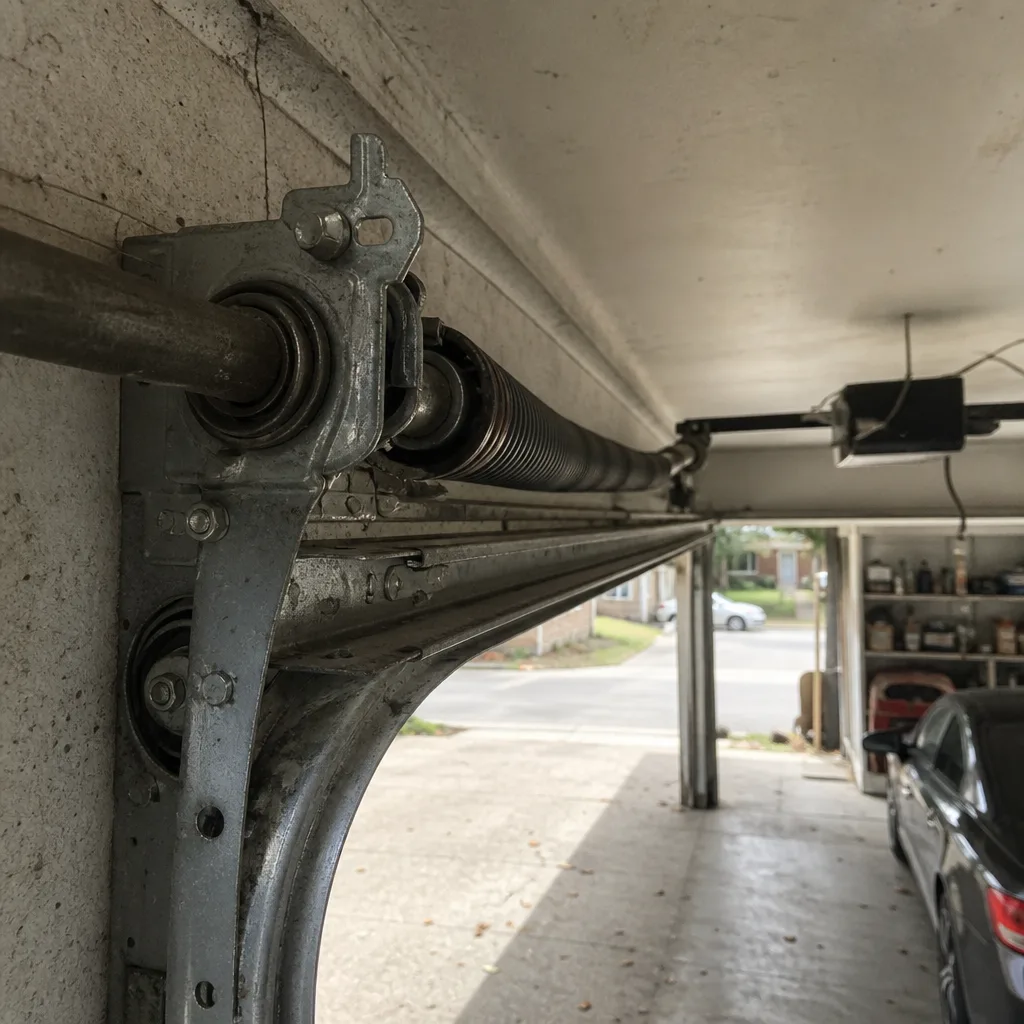 Before
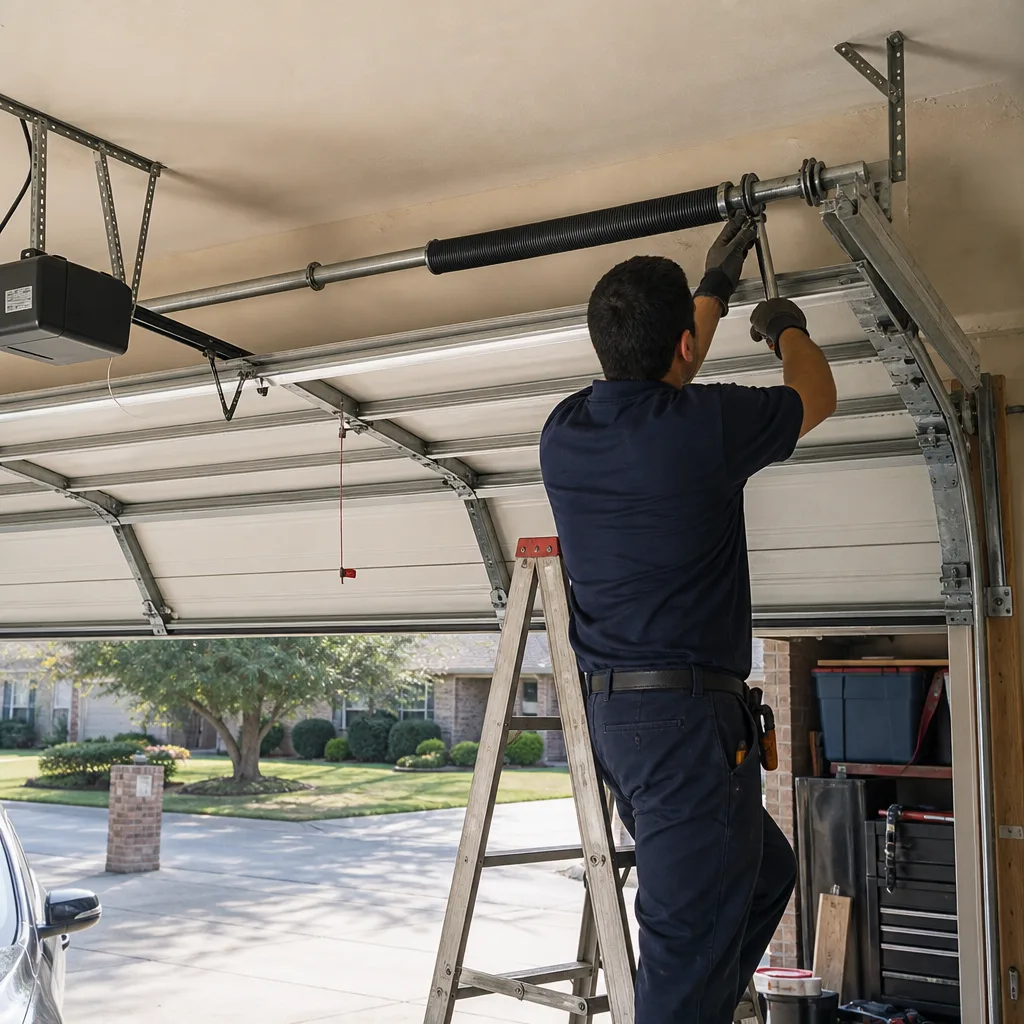 After
After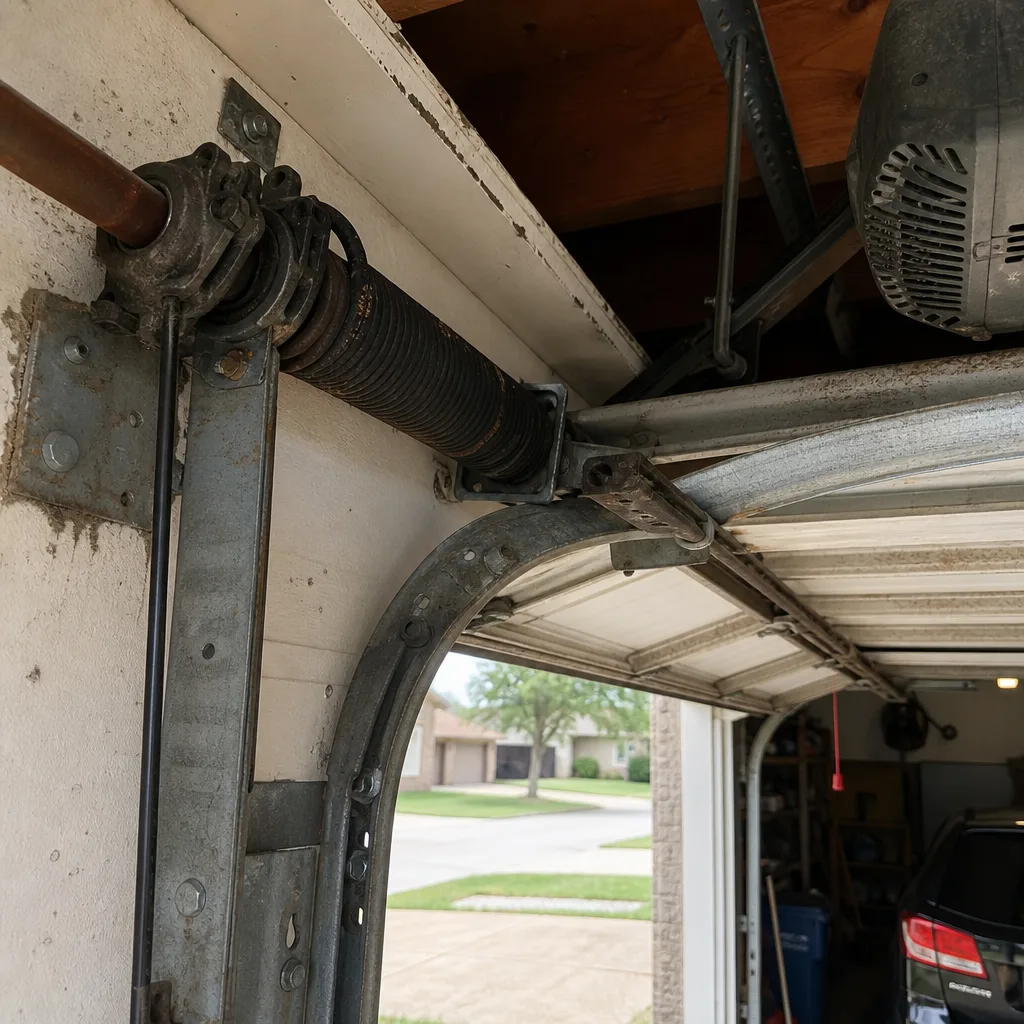 Before
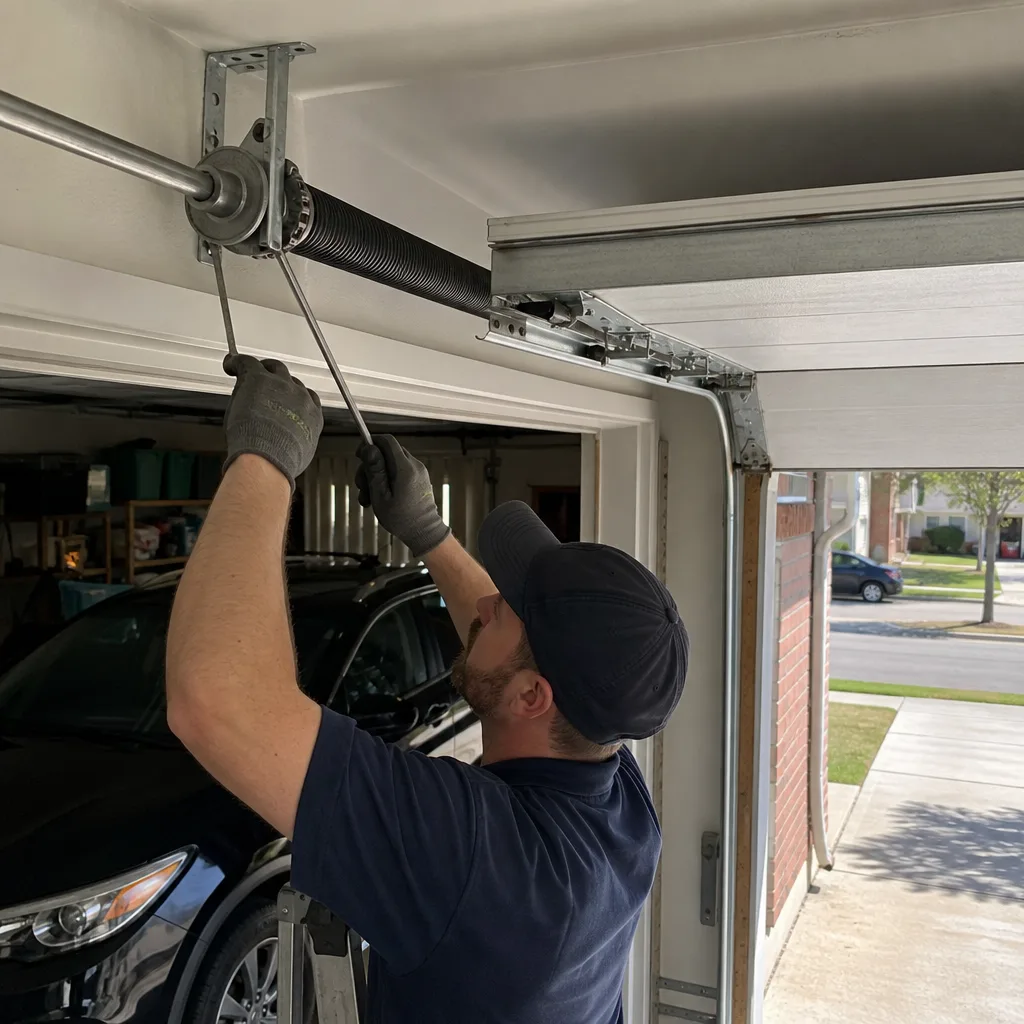 After
AfterThe Complete Guide to Garage Door in Coppell
Most homeowners research refrigerators for two weeks and choose a garage door in twenty minutes - yet the door runs thousands of cycles a year and takes up 30% of the home’s street-facing facade. In Coppell, that decision carries extra weight. Our summers hit 105°F, our springs snap faster than the national average, and a hailstorm can turn a thin steel panel into a pockmarked eyesore overnight. This guide covers every component, trade-off, and local variable that affects how a garage door performs in North Texas. By the end, you’ll know how to read a cycle rating like a technician, why builder-grade doors fail early here, and when Coppell requires a city inspection for a replacement.
Quick Answer
A garage door in Coppell must withstand extreme heat cycling, UV exposure, and hail risk that exceeds national averages. The right door pairs a 25,000-cycle torsion spring system with a steel gauge of 24 or lower (or composite backing), proper wind-load bracing, and a professional installation that accounts for local code triggers. Expect to invest $1,200-$3,800 for a quality replacement, though a detailed Garage Door Cost Breakdown: The Coppell Homeowner’s Reference for 2026 can help you understand where your money goes, with permits required when the opening size changes or structural framing is modified.
Table of Contents
- How Coppell Climate Wears Garage Doors Faster
- Torsion vs. Extension Springs in North Texas
- Reading Garage Door Cycle Ratings
- Panel Materials: Steel, Composite, and Wood
- Builder-Grade vs. Trade-Grade Doors
- Coppell Permits and Inspections
- Openers, Brands, and Smart Features
- Maintenance That Actually Matters
How Coppell Climate Wears Garage Doors Faster
North Texas does not go easy on garage doors. In Coppell, we see temperature swings of 40 degrees in a single day during shoulder seasons. That thermal cycling causes metal components to expand and contract repeatedly, accelerating fatigue in springs, cables, and hardware. The summer sun beats on south- and west-facing doors for six to eight hours daily, raising surface temperatures past 140°F and degrading weatherstripping, paint finishes, and plastic opener components faster than in milder climates.
Hail is the other variable competitors rarely address. Coppell sits in the southern extent of Tornado Alley and sees significant hail events every two to three years on average. A 26-gauge steel door - common in builder packages throughout the 1990s and 2000s - will dent visibly from golf-ball-sized hail. We’ve replaced dozens of doors in Coppell neighborhoods like Cottonwood Estates and Riverchase after storms that left the roof intact but the garage door looking like a golf ball itself.
UV intensity completes the trio. The same sunlight that fades patio furniture breaks down the polymer coatings on lower-end doors, causing chalking and color shift within five to seven years. In our experience, doors facing west in Coppell show this degradation two to three years sooner than north-facing installations.
What this means practically: material selection and finish quality matter more here than in coastal or northern markets where temperature moderation reduces thermal stress. A door that rates “good” in a national buying guide may rate “adequate at best” for Coppell’s specific conditions.
Torsion vs. Extension Springs in North Texas
The spring system carries the entire weight of your door - typically 150 to 400 pounds - and does the heavy lifting every time you press the remote. There are two types, and the choice affects longevity, safety, and repair cost in Coppell’s climate.
Torsion springs mount horizontally above the door opening, coiled around a steel shaft. They distribute lifting force evenly across the door width and typically last 15,000 to 25,000 cycles in normal conditions. In Coppell’s heat, we’ve found quality torsion springs still reach the lower end of that range - 15,000 to 18,000 cycles - when properly specified and lubricated. A cycle is one full open-and-close. For a household using the door four times daily, that’s roughly ten to twelve years.
Extension springs run vertically along the horizontal tracks, stretching and contracting to assist lifting. They cost less to install but wear faster in hot climates because the steel undergoes more aggressive expansion-contraction cycling. In Coppell, we regularly see extension spring failures at 8,000 to 12,000 cycles, sometimes sooner if the springs were underspecified for the door weight. They also pose a higher safety risk when they break; a torsion spring releases energy into the shaft, while a failed extension spring can whip through the garage.
Our recommendation for Coppell homes: torsion springs, always, with a cycle rating that matches actual usage. For a door used six or more times daily - common with teenagers, home businesses, or multi-car households - specify 25,000-cycle springs even if the standard offering is 10,000. The incremental cost is modest; the avoided failure is significant.
One local note: in older Coppell subdivisions like Coppell Woods and Lakeview, we still encounter original extension spring systems from the 1980s and 1990s. These are well past safe service life. If your door shudders on opening, opens unevenly, or the springs show gaps in the coils, the system needs evaluation.
Reading Garage Door Cycle Ratings
The cycle rating is the most important number on a garage door that most buyers never check. Here’s how to read it and what it means for your household.
- Find the rating. Ask your installer or check the spring tag. Quality manufacturers like Clopay and Wayne Dalton specify cycle ratings on the spring itself or in the job documentation. If the salesperson cannot state a number, that is a signal.
- Calculate your daily cycles. Morning departure, afternoon return, evening errands, weekend projects - count realistically. A two-car family with teenagers often hits six to eight cycles daily.
- Do the math. A 10,000-cycle spring at 6 cycles daily lasts 4.6 years. A 25,000-cycle spring at the same usage lasts 11.4 years. In Coppell’s heat, derate by 15% - the actual lifespan will be shorter than the laboratory rating.
- Check the warranty alignment. Some “lifetime” spring warranties pro-rate after a certain cycle count. Read the fine print. A true 25,000-cycle spring with a no-pro-rata warranty costs more upfront and saves money over time.
- Verify the spring is matched to the door weight. An underspecified spring achieves its cycle rating by working harder, which means it fails sooner. The right spring for a 250-pound door is not the right spring for a 350-pound door, even if both are labeled “25,000 cycle.”
In Coppell, we see a pattern: homeowners who bought on price alone replace springs every four to five years, while those who invested in proper cycle ratings go ten to fifteen years between services. The total cost of ownership favors the higher specification.
Panel Materials: Steel, Composite, and Wood
The panel material determines how your door handles Coppell’s hail, heat, and UV exposure. Here’s how the options compare for local conditions.
Steel remains the most common choice, but gauge matters enormously. The lower the gauge number, the thicker the steel. A 24-gauge door with composite backing handles most Coppell hail without denting. A 26-gauge unbacked door dents from 1-inch hail - the kind we see regularly in spring storms. Steel also conducts heat, so an uninsulated steel door radiates summer temperatures into the garage space. For attached garages in Coppell, we recommend minimum 24-gauge steel with polyurethane insulation and a thermal break.
Composite materials - fiberglass overlays, vinyl skins, or engineered wood composites - resist denting better than thin steel and do not rust. They handle UV well if the finish quality is high. The trade-off is structural rigidity; a composite door needs a robust frame to resist wind loading. In Coppell, where straight-line winds hit 60+ mph several times yearly, frame quality matters. We’ve repaired composite doors in MacArthur Estates where the skin survived but the internal frame twisted in a wind event.
Wood offers unmatched appearance for traditional or custom architecture, particularly in Coppell’s established neighborhoods where curb appeal affects resale. The material requires maintenance: resealing every two to three years in our UV intensity, and prompt repair of any moisture intrusion before rot sets in. Cedar and mahogany hold up better than pine. A well-maintained wood door in Coppell lasts twenty years; a neglected one needs replacement in eight to ten.
Our material recommendation by scenario:
- Maximum durability, minimal maintenance: 24-gauge steel with composite backing, insulated
- Hail-prone exposure, budget priority: 25-gauge steel with polystyrene backing (compromise, but better than unbacked)
- Historic or custom aesthetic, owner committed to maintenance: select hardwood with marine-grade finish
- Coastal-modern or contemporary architecture, dent resistance priority: high-quality composite with reinforced frame
Builder-Grade vs. Trade-Grade Doors
This distinction costs Coppell homeowners thousands in premature replacement, yet almost no buying guide addresses it directly.
Builder-grade doors are specified by home builders to meet a price point, not a performance standard. Common in Coppell construction from the 1980s through the mid-2000s, these doors typically feature 27- or 28-gauge steel (thinner than consumer-grade), 10,000-cycle springs, minimal insulation, and hardware that meets code but little more. They function adequately for five to eight years, then begin failing in sequence: springs, rollers, cables, panels.
Trade-grade doors are what professional installers specify for their own homes. The steel is 24-gauge or lower. Springs are 25,000-cycle minimum. Rollers are ball-bearing steel, not plastic. Hinges are 14-gauge, not 18-gauge. The door costs 40% to 60% more upfront and lasts two to three times as long with lower maintenance.
The critical difference is not visible from the street. A builder-grade door and a trade-grade door in the same panel style look identical when new. The difference emerges at year seven, when the builder-grade door needs $800 in repairs and the trade-grade door needs its first $89 tune-up.
In Coppell, we’ve documented this pattern across neighborhoods. In Arbor Meadows, homes built 2002-2006 with original builder-grade doors are now on their second or third replacement. In newer infill near Old Town Coppell, homeowners who invested in trade-grade doors at installation report fifteen years of trouble-free operation.
When evaluating a replacement quote, ask specifically: what gauge steel, what cycle springs, what roller type, what hinge gauge? A legitimate trade-grade installer answers without hesitation. A company selling builder-grade at trade-grade prices deflects or generalizes.
Coppell Permits and Inspections
Garage door replacement in Coppell does not always require a permit, but Garage Door Permits, Codes & Inspections in TX: What You Need to Know explains the specific triggers worth understanding before work begins.
A straight swap - same door size, same opening, no structural modification - typically does not require permitting. The work is considered maintenance or like-for-like replacement. Most garage door repair in Coppell falls in this category.
Permitting is required when:
- The rough opening dimensions change, including height or width modification
- Structural framing is added, removed, or altered (header changes, jack stud relocation)
- A window is cut into the door or the existing window configuration changes significantly
- The door is part of a larger structural modification, such as converting a carport to enclosed garage space
Coppell’s Building Inspections division, located at 265 West Parkway Boulevard, reviews permit applications with a typical turnaround of two to three business days for residential work. The inspection itself checks structural integrity, wind-load compliance, and proper installation of safety components including photo-eye sensors and auto-reverse mechanisms.
A permit-triggering job that proceeds without one can stall a home sale. Title companies in the Coppell area increasingly flag unpermitted structural modifications during the closing process. The cost to permit retroactively, with potential rework, exceeds the original permit fee several times over.
Reputable installers handle permit acquisition as part of the project. At Mainspring Garage Door Co. home, we pull permits when required, schedule inspections, and ensure the door passes before we consider the job complete. The 90-Day Done Right Promise covers permit-related rework at no charge if we handle the process.
Openers, Brands, and Smart Features
The opener does the work the springs make possible. In Coppell’s climate, motor thermal protection and drive type matter as much as horsepower.
Drive types: Chain drive is durable and economical but louder - acceptable for detached garages, less so for bedrooms above or adjacent. Belt drive runs quieter, with comparable durability in residential use. Screw drive, once common, has declined in reliability in hot climates; the lubricated screw attracts dust and the grease breaks down faster in our temperature extremes. We recommend belt drive for most attached garage situations in Coppell, chain drive for detached workshops or budget-conscious replacements.
Motor size: A 1/2-horsepower opener handles most residential steel doors up to 16 feet wide. A 3/4-horsepower unit is appropriate for heavier wood doors or doors with significant insulation weight. Oversizing does not improve performance and wastes energy; undersizing strains the motor and shortens lifespan.
Smart features: WiFi-enabled openers allow remote operation and status monitoring through manufacturer apps. For Coppell homeowners who travel or own rental properties, this is genuine utility. The technology is mature - not experimental - and integrates with major home automation platforms. We install and service LiftMaster and Chamberlain smart openers regularly, and both perform reliably in our climate when properly configured.
Safety systems: Federal law requires photo-eye sensors and auto-reverse on all openers manufactured after 1993. In Coppell, dust and pollen accumulation on photo-eye lenses causes more false trips than in less pollen-intensive regions. Monthly cleaning with a soft cloth prevents most issues. If your door reverses unexpectedly in spring, check the eyes before calling for service.
Brands we work with regularly: LiftMaster for opener reliability and smart-feature maturity; Chamberlain for value in the same ecosystem; Genie for specific legacy compatibility; Clopay and Amarr for integrated door-and-opener packages; Wayne Dalton for proprietary drive systems in their door lines; Craftsman and Raynor for existing-home replacement matching.
Maintenance That Actually Matters
Most garage door maintenance advice is generic and overcomplicated. For Coppell conditions, four tasks matter. Do these twice yearly - we suggest April and October, before the severe weather seasons.
- Lubricate the spring system. Use a silicone-based spray lubricant on torsion springs, bearings, and rollers. Do not use WD-40 as a lubricant; it is a solvent that strips protective coatings. In Coppell’s dust, a dry lubricant attracts less grit than wet formulations. Apply sparingly - excess lubricant becomes a dust magnet.
- Inspect and replace weatherstripping. The bottom seal and perimeter stripping keep dust, water, and pests out of the garage. UV degradation in our climate causes cracking and hardening within three to five years. A failed seal in July lets 110°F air stream into the garage continuously. Replacement is inexpensive and takes ten minutes with the right profile.
- Test the safety reversal system. Place a 2×4 flat on the floor centered under the door path. Close the door. It must reverse within two seconds of contact. Test photo-eyes by interrupting the beam during closing - the door must reverse immediately. If either test fails, call for service; these are safety-critical systems, not DIY adjustments.
- Check hardware tightness. Vibration from daily cycling loosens roller brackets, track bolts, and opener mounting hardware. A socket wrench and ten minutes prevents the bracket failure that causes a door to come off track. Do not adjust spring tension or cable attachment - these components store lethal energy and require trained technicians.
The $89 Seasonal Tune-Up we offer covers these four tasks plus a full component inspection. For most Coppell homeowners, professional maintenance every eighteen to twenty-four months, with homeowner checks in between, is the right interval.
Common Mistakes to Avoid
- Buying on door price alone, ignoring spring specification. A low door price with 10,000-cycle springs costs more over time than a higher price with 25,000-cycle springs. In Coppell’s heat, the difference accelerates.
- Choosing unbacked steel in hail country. We’ve replaced dented 26-gauge doors in Coppell after storms that left properly specified 24-gauge doors untouched. The savings evaporate with the first significant hail event.
- Ignoring the R-value when the garage is attached. An uninsulated door radiates summer heat into living spaces and winter cold into utility-adjacent rooms. The energy cost exceeds the insulation upgrade within three to four years.
- DIY spring replacement. Torsion springs store enough energy to cause serious injury or death. Every year, emergency rooms in the Dallas-Fort Worth area treat homeowners who attempted this. The savings are not worth the risk.
- Permitting a size change without pulling a permit. The inspection protects structural integrity and validates insurance coverage. Skipping it to save $150 creates liability that persists for years.
- Matching a new door to faded paint rather than original color. UV shifts colors over time. A door matched to current siding looks wrong when the siding is eventually refreshed. Match to the original specification or plan to repaint concurrently.
- Neglecting the opener when replacing the door. A 15-year-old opener with a new, heavier insulated door is a mismatch that strains the motor and voids remaining warranty. Replace as a system when the opener exceeds ten years.
When to Call a Professional
Some situations demand trained technicians with the right tools and parts. Call for professional service when: the door is off-track or hanging unevenly; a spring is broken, gapped, or visibly damaged; cables are frayed or detached; the opener motor runs but the door does not move; there is structural damage to panels or frame from impact; or safety systems fail testing. These conditions involve components under tension or load that can cause injury without proper handling.
Mainspring Garage Door Co. offers free estimates in Coppell - call (972) 646-8653 - and our more guides & resources cover additional topics for local homeowners. Our technicians arrive with springs, cables, rollers, and openers on the truck, and most repairs complete in a single visit. The price is stated before any work begins, with no surprises on the bill.
Frequently Asked Questions
A quality replacement in Coppell typically ranges from $1,200 for a basic insulated steel door to $3,800 for a premium composite or custom wood installation with high-cycle springs and smart opener. The price depends on door size, material gauge, insulation level, spring specification, and whether structural modification triggers permitting. We provide written, itemized quotes before any work begins - call (972) 646-8653 for a free estimate.
Quality torsion springs last 12,000 to 18,000 cycles in Coppell’s heat, compared to 15,000 to 25,000 in milder climates. For a door used four times daily, that’s roughly eight to twelve years. Extension springs wear faster, typically 8,000 to 12,000 cycles here. Specifying 25,000-cycle torsion springs extends service life significantly and reduces lifetime cost.
A straight replacement with identical dimensions does not require permitting. Coppell requires a permit when the rough opening changes size, structural framing is modified, or window configurations change significantly. Reputable installers handle permit acquisition; unpermitted structural work can complicate future home sales.
No. Torsion springs store lethal energy and require specialized winding tools and training. The Consumer Product Safety Commission documents hundreds of serious injuries annually from DIY spring work. This is not a homeowner maintenance task. Our background-checked, uniformed technicians handle spring replacement safely, with the work covered by our 90-Day Done Right Promise.
24-gauge or lower steel with composite backing resists most Coppell hail without denting. Unbacked 26-gauge steel dents from 1-inch hail, which we see regularly. High-quality composites with reinforced frames also perform well. Wood dents less than thin steel but can split from large hail if the finish is compromised.
Replace the opener if it exceeds ten years, if the new door is significantly heavier, or if the existing unit lacks modern safety features. A new insulated door on an aging 1/3-horsepower opener strains the motor and risks premature failure. We assess opener compatibility during every garage door installation in Coppell and recommend accordingly.
Check the steel gauge (builder-grade is typically 27-28 gauge, trade-grade 24 or lower), spring cycle rating (builder-grade 10,000, trade-grade 25,000), and roller type (plastic for builder-grade, ball-bearing steel for trade-grade). If these specifications are not documented, a professional inspection identifies the grade quickly. Many Coppell homes built 1985-2010 have original builder-grade doors now due for trade-grade replacement.
We are factory-familiar with all major brands: LiftMaster, Chamberlain, Genie, Clopay, Amarr, Wayne Dalton, Craftsman, and Raynor. Our trucks carry parts for same-day repair on these lines, and we install new doors and openers from each manufacturer based on the specific needs of your home and usage pattern.
The Bottom Line
A garage door in Coppell works harder than the national average assumes. The right choice pairs 25,000-cycle torsion springs, 24-gauge or lower steel (or quality composite), proper insulation, and professional installation that accounts for local code requirements. Builder-grade doors fail early here; trade-grade doors repay their premium through longevity and reduced maintenance. Maintenance is simple but consequential: lubricate, seal, test safety systems, and check hardware twice yearly. When replacement is needed, understand what you’re buying - gauge, cycle rating, roller type, hinge gauge - and get every specification in writing.
We’ve served Coppell and surrounding communities since 2016, and our roots in this trade go back to 1984. If you’re evaluating a door replacement, need a second opinion on a written estimate, or want to schedule a Seasonal Tune-Up, we’re straightforward to reach. A live person answers the phone, 24/7 - no phone trees, no voicemail, no after-hours answering service. Call (972) 646-8653 for a free estimate. The price we quote is the price on the bill, and every job carries our 90-Day Done Right Promise in writing.
Written by Carl Dutton, Owner at Mainspring Garage Door Co., serving Coppell since 2016.