
Last updated September 10, 2026
Full 25-point door and opener safety check with every visit - springs, cables, rollers, tracks, and your LiftMaster or Chamberlain opener included
You get a price before we start. It does not change when the truck arrives.
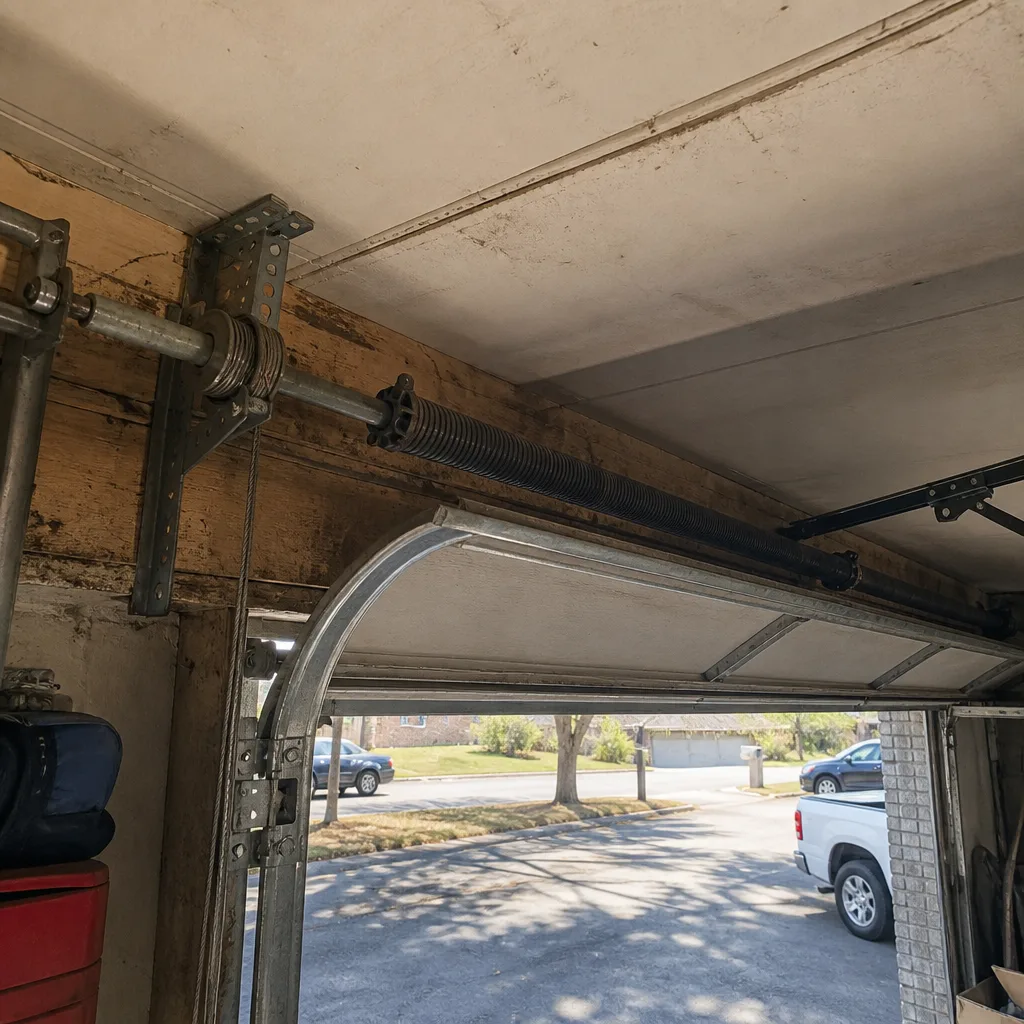 Before
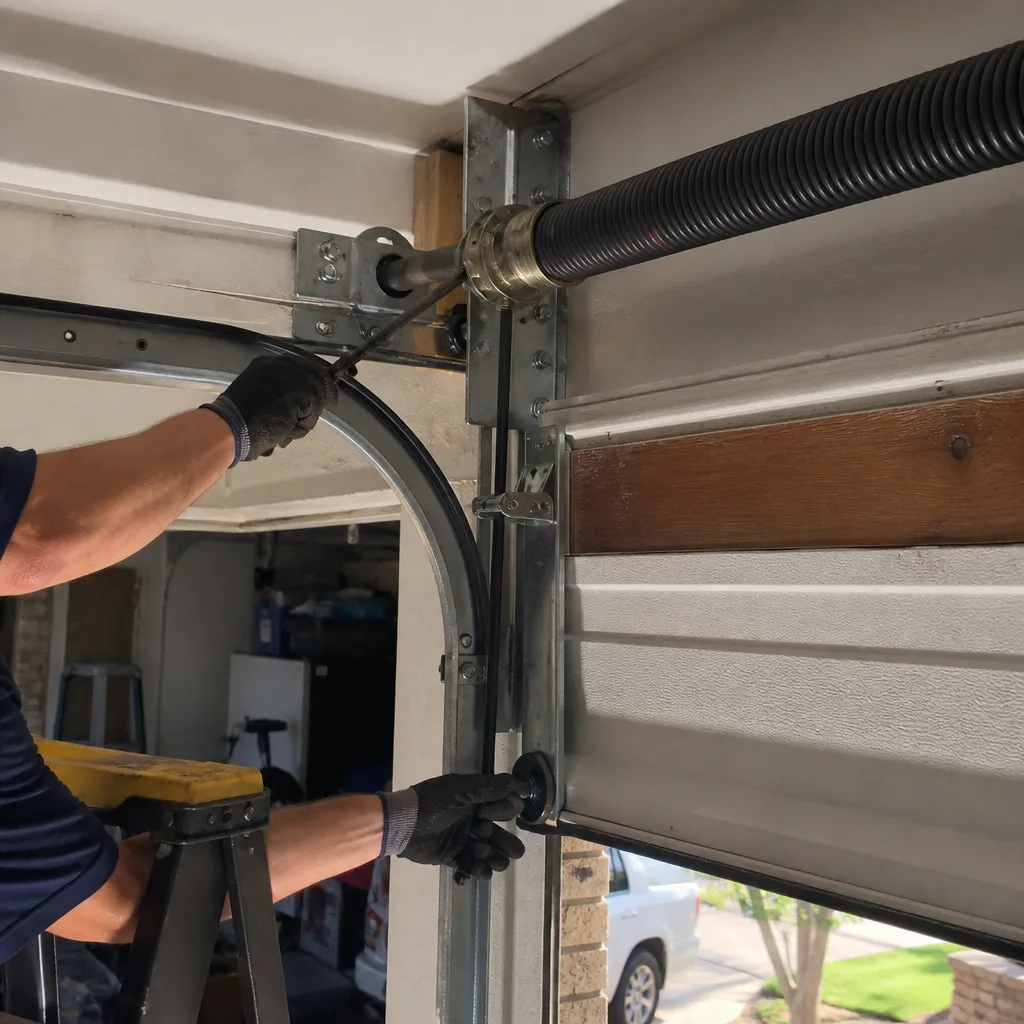 After
After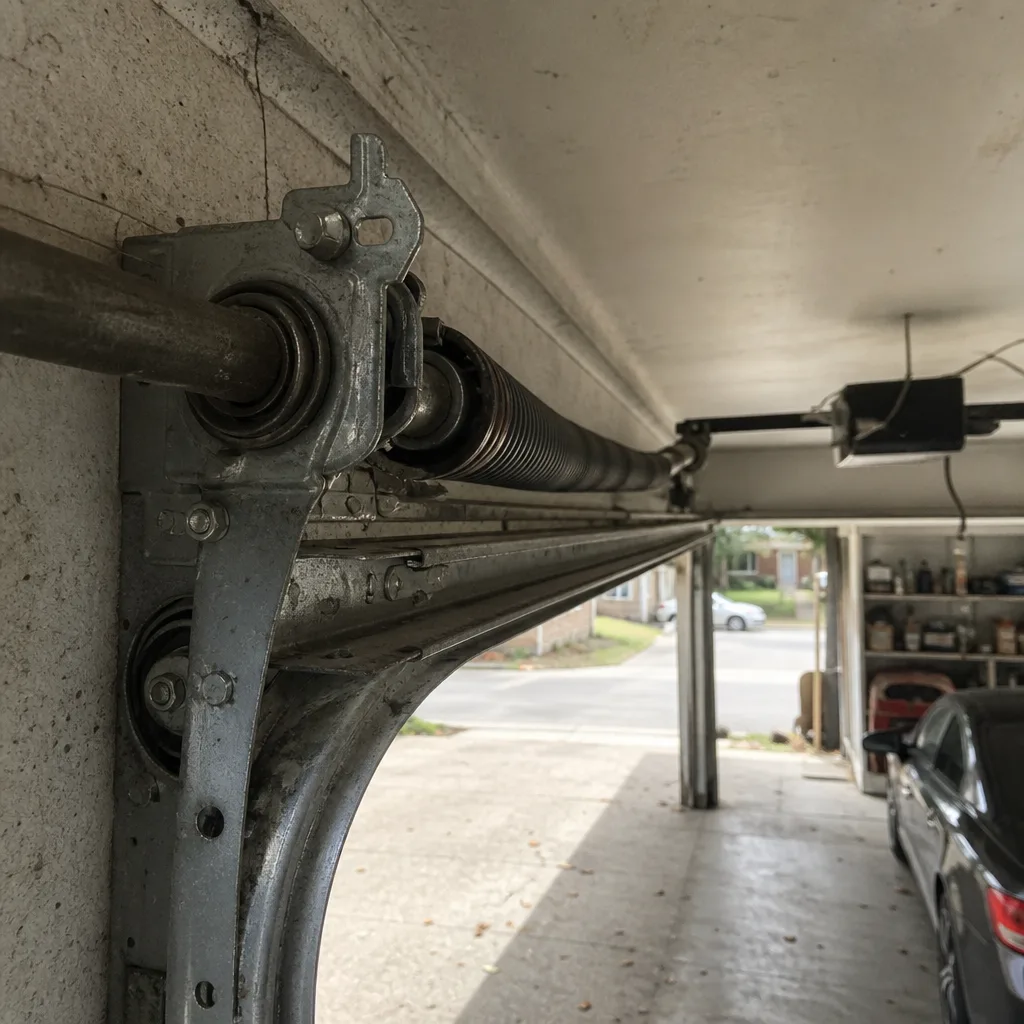 Before
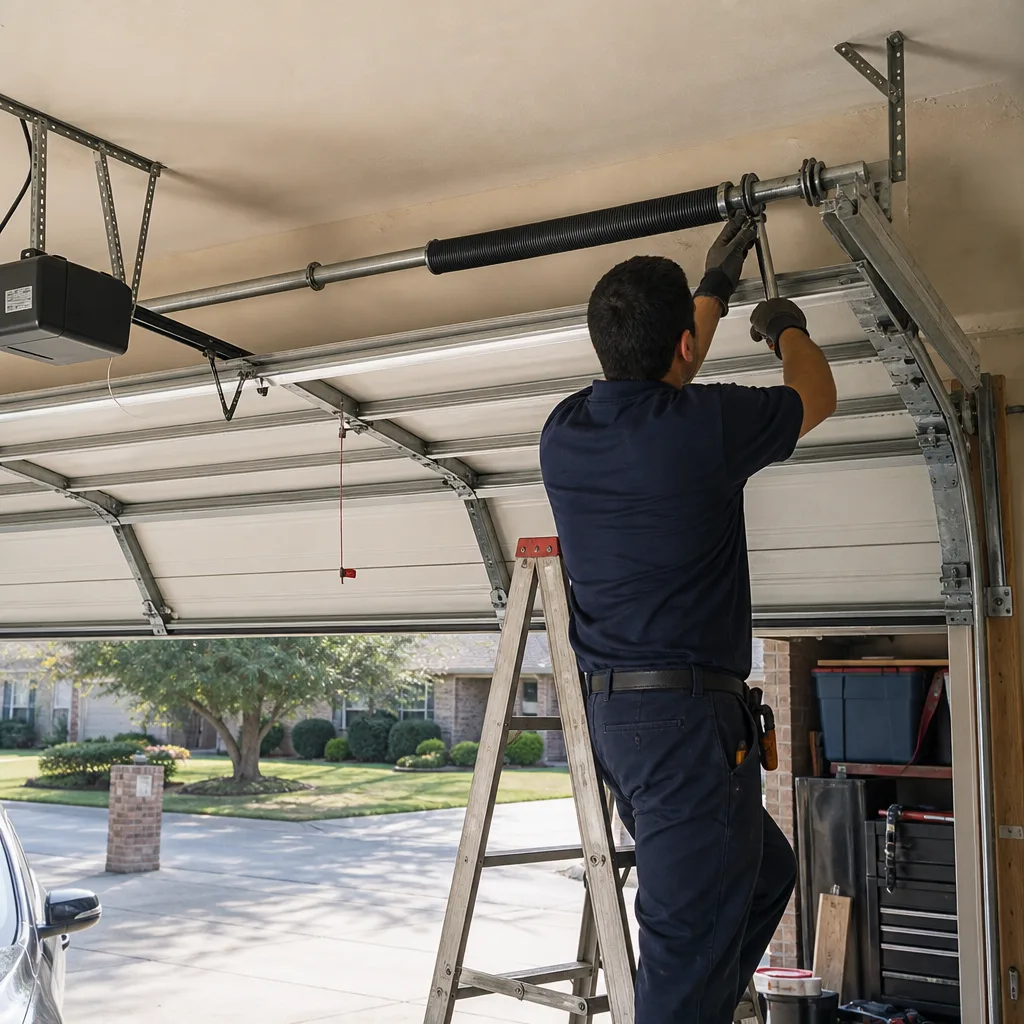 After
After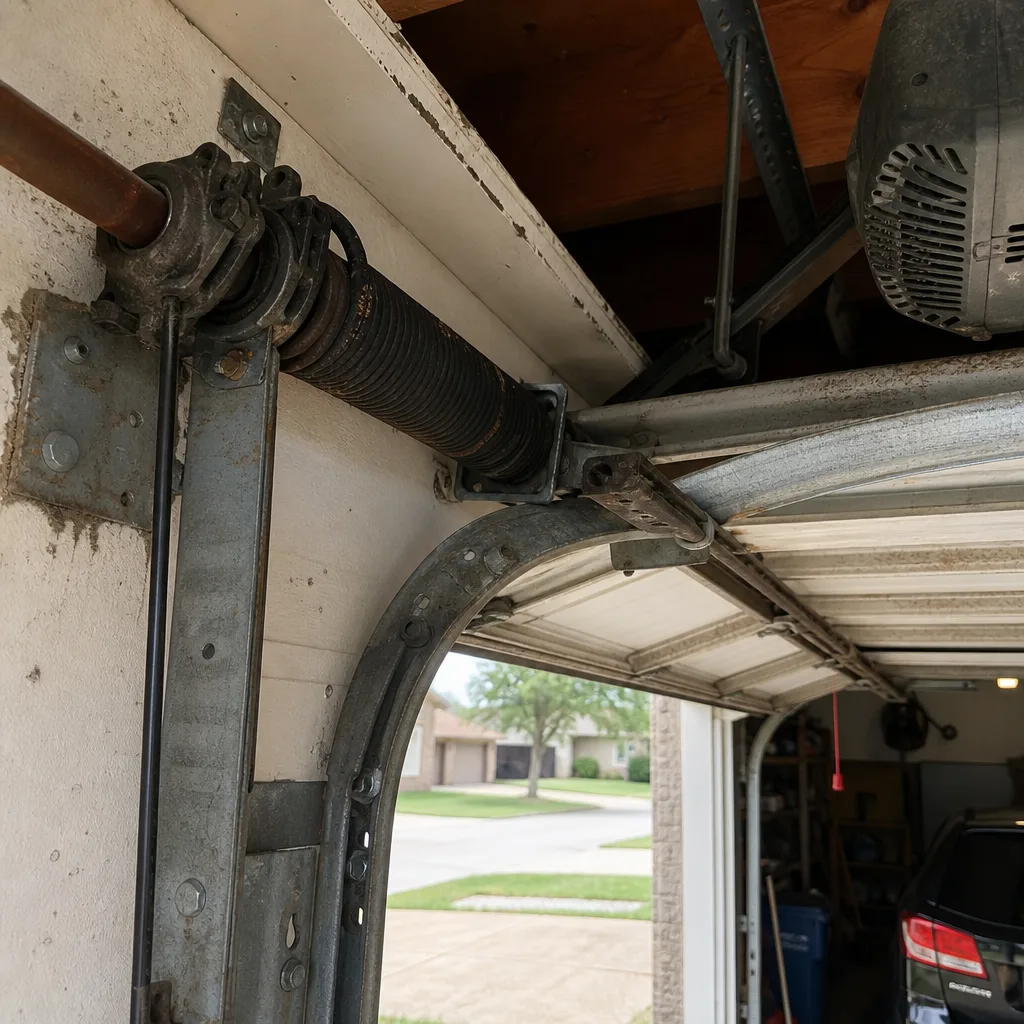 Before
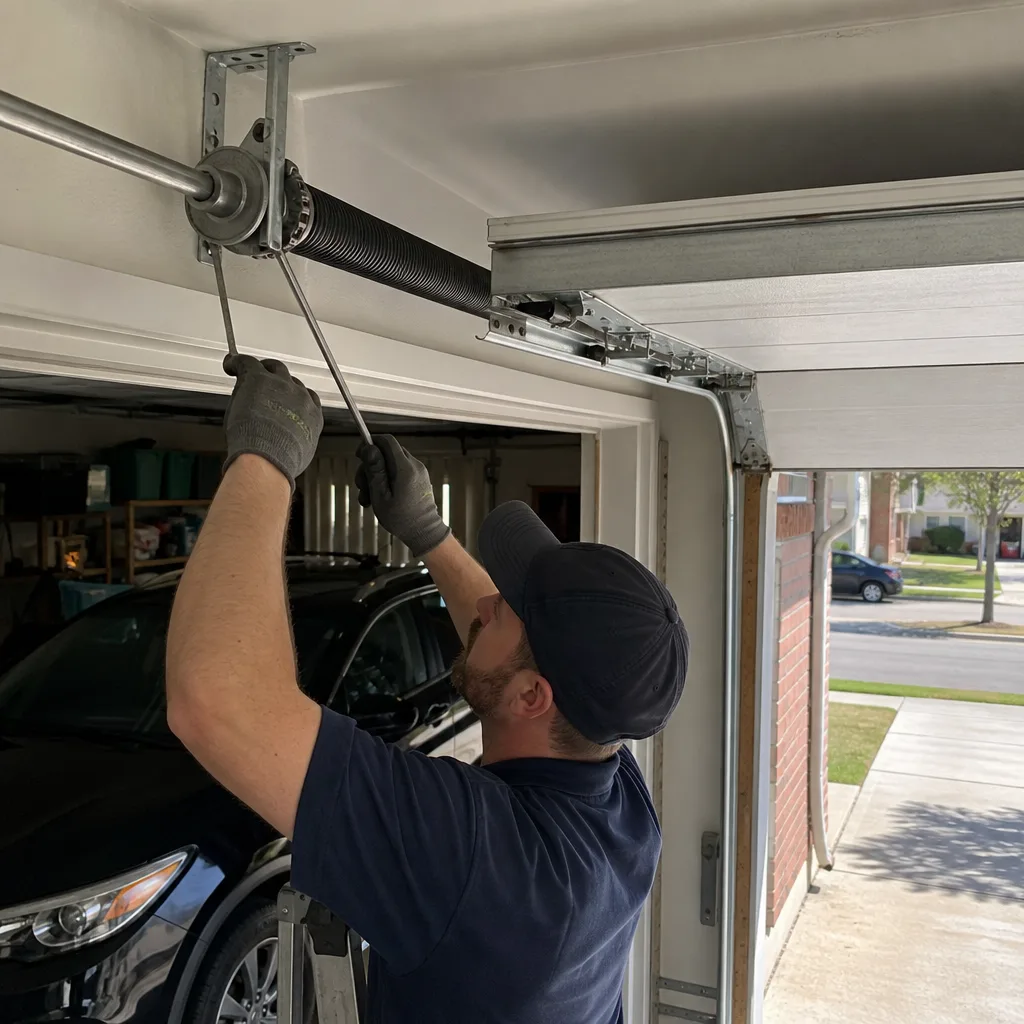 After
AfterGarage Door Permits, Codes & Inspections in TX: What You Need to Know
Here is a number that surprises most Coppell homeowners: roughly 60% of garage door replacements in Texas are performed without any permit being pulled, and the vast majority of those never cause a single day’s trouble. The problem is not the day of installation. The problem is the day you list the house, file a storm-damage claim, or discover your new door does not meet the fire-separation code for an attached garage. Texas gives homeowners and contractors wide latitude on garage door work, but the line between a permit-exempt replacement and a code-triggering alteration is narrower than most people realize. In this guide, we will map exactly where that line sits under current Texas and Coppell municipal rules, show you how to check your own home’s permit history, and explain when skipping the paperwork is legal - and when it is not.
Quick Answer
Most garage door replacements in Texas do not require a permit if they are true “like-for-like” swaps with no structural, electrical, or fire-rating changes. However, any alteration to the opening size, header structure, electrical supply, or fire separation in an attached garage triggers permit and inspection requirements under the Texas Residential Code. In Coppell, openings wider than 16 feet or any change to an attached garage’s fire rating require a separate municipal permit beyond the state baseline.
Table of Contents
- When Are Permits Required for Garage Door Work in Texas?
- What “Like-for-Like Replacement” Actually Means
- The Texas Residential Code Sections That Govern Your Door
- Coppell’s Municipal Overlay: Where City Rules Go Beyond State Baseline
- HOA Architectural Approval vs. City Permits in Coppell
- How to Self-Verify a Past Installation’s Permit Status
- How Unpermitted Work Complicates Insurance Claims and Home Sales
- Common Mistakes to Avoid
- When to Call a Professional
- Frequently Asked Questions
- The Bottom Line
When Are Permits Required for Garage Door Work in Texas?
Texas operates under a statewide building code framework, but enforcement happens at the local level. This creates a patchwork where the same physical job might need a permit in one city and not in another. Understanding the trigger points saves you from both unnecessary paperwork and costly surprises later.
The general rule under the Texas Residential Code is straightforward: routine maintenance, repairs, and direct replacements of existing equipment do not require permits. When you replace a broken spring, swap out a worn cable, or install a new opener on the existing electrical circuit, you are working within the scope of what the code considers ordinary upkeep.
Permits become mandatory when the work crosses into one of these four categories:
- Structural changes: Modifying or removing the header above the door, changing the rough opening dimensions, or altering load-bearing elements of the garage wall
- Electrical alterations: Adding a new dedicated circuit for the opener, relocating the outlet, or any work beyond the existing junction box
- Fire-separation modifications: Changing the door’s fire rating, replacing a fire-rated door with a non-rated one, or altering the assembly between an attached garage and living space
- Envelope changes: Converting a garage door opening to a wall, adding windows that change the structural integrity, or installing a door in a previously blank wall
Here is where Coppell homeowners need to pay particular attention. The City of Coppell has adopted the 2021 International Residential Code with Texas amendments, but it also maintains specific local amendments that tighten certain requirements. Most notably, any garage door opening exceeding 16 feet in width requires an engineered header and a separate structural permit, regardless of whether the door itself is a direct replacement. This catches many homeowners in the newer estates off Sandy Lake Road and Bethel School Road who are upgrading to oversized RV or multi-car openings.
Another Coppell-specific trigger: if your home is in a floodplain zone, which includes portions of the Old Town area near Cottonwood Creek, any modification to the garage envelope may require additional review by the city’s floodplain administrator. This is not garage-door-specific code, but it attaches to the permit process in ways that surprise homeowners who assumed they were only replacing a door.
We have been called to jobs in Coppell where a homeowner started with a simple garage door repair and ended up needing full permitting because the previous owner had enlarged the opening without documentation. The current owner inherits that problem. It is worth knowing the history before you begin any work.
What “Like-for-Like Replacement” Actually Means
The phrase “like-for-like” appears in Texas code commentary as the standard for permit exemption, but it is not defined with the precision most homeowners assume. This ambiguity causes more permit violations than outright disregard for the rules.
A true like-for-like replacement in Texas means:
- The new door fits within the existing rough opening without structural modification
- The door’s wind-load rating equals or exceeds the previous door’s rating for the specific Texas wind zone
- The fire rating, if applicable to an attached garage, is maintained or improved
- The weight and spring system are compatible with the existing header and track mounting
- No electrical modifications are required beyond plug-and-play opener replacement
Where homeowners and even some contractors go wrong is in assuming that upgrading to a heavier door, adding insulation, or switching from a non-rated to a rated door (or vice versa) still qualifies as like-for-like. It often does not.
In North Texas, including Coppell, wind-load rating is especially critical. The Dallas-Fort Worth metro sits in a 120 mph wind zone under TAS 201 testing protocols. If your original door was rated for 120 mph and you replace it with a 90 mph door to save money, you have violated code even if the physical dimensions are identical. Conversely, upgrading to a 140 mph door is permitted without additional paperwork because you are improving performance.
We see this confusion regularly with insulated door upgrades. A homeowner in Coppell’s MacArthur Estates replaces a thin, uninsulated steel door with a thick, polyurethane-insulated model. The new door weighs 40% more. The existing header, sized for the lighter load, may now be undersized. The spring system, calculated for the old weight, will fail prematurely or operate dangerously. This is not a like-for-like replacement, and it requires engineering review.
The same principle applies to material changes. Switching from a standard steel panel door to a wood overlay or full wood door dramatically changes weight and often requires reinforced jambs and headers. Many of the custom homes in Coppell’s gated communities along Parkway Boulevard have doors that push these limits. What looks like a simple style upgrade can cross into permitted alteration territory.
The Texas Residential Code Sections That Govern Your Door
Two sections of the Texas Residential Code, IRC 2021 with Texas amendments, bear directly on garage door installation. You do not need to memorize the numbers, but understanding what they require helps you ask better questions of any contractor you hire. For help selecting the right professional, see our guide on How to Hire a Garage Door Contractor in Coppell: A Step-by-Step Guide.
R302.5: Fire Separation Between Garage and Dwelling
This is the code section that generates the most confusion and the most expensive corrections. R302.5 requires a fire-resistance-rated assembly between an attached garage and any living space. For garage doors, this matters in two specific ways.
First, if your garage has a door leading directly into the house, that door must be a 20-minute fire-rated door with a self-closing device. Replacing this pedestrian door with a non-rated door, or removing the self-closer, is a code violation regardless of whether you pull a permit. We have seen this in Coppell’s 1980s-era homes in the Woodridge area, where homeowners replace the utilitarian steel fire door with a decorative glass-paneled model without understanding the rating requirement.
Second, and more relevant to overhead garage doors: if your garage is attached, the walls and ceiling separating it from living space must maintain continuous fire protection. A garage door replacement that compromises this envelope, such as by installing a pass-through door in the overhead panel or modifying the jamb seal in a way that breaks the fire-rated assembly, triggers permit requirements and inspection.
The practical implication: if you are replacing the overhead door on an attached garage in Coppell, your contractor must verify that the new door’s perimeter seal maintains the fire separation. This is not automatic. Different manufacturers achieve this differently. Wayne Dalton’s fire-rated assemblies, for instance, use specific jamb hardware that must be installed as a system to maintain the rating. Swapping in generic hardware breaks the assembly.
R502.5/R602.7: Structural Headers
These sections govern the structural members above openings. A garage door header carries the load of the wall, roof, and any second story above the opening. The required header size depends on:
- The span of the opening
- The load above (roof only, or roof plus second floor)
- The species and grade of lumber used
- Whether the header is a single member or built-up
For a standard 16-foot opening with roof load only, the 2021 IRC requires a minimum 2×12 header of #2 grade or better, or an engineered equivalent. In Coppell, where many homes have bonus rooms or second stories above the garage, the header requirement jumps significantly. A 20-foot opening with floor and roof load may require an LVL or steel beam engineered for the specific load path.
The critical detail: if your replacement door requires a different track radius or headroom configuration, and that modification needs header adjustment, you have crossed from replacement into alteration. This is common when homeowners switch from a standard-lift track to a low-headroom or high-lift system to accommodate a car lift or taller vehicle. The door may fit the opening, but the track geometry changes the load path on the header.
We encountered this exact situation on a job in Coppell’s Arbor Lakes neighborhood. The homeowner wanted a high-lift track to fit a vehicle lift. The existing header, adequate for standard lift, was undersized for the changed moment arm of the high-lift configuration. We engineered a new LVL header, pulled the permit, and passed inspection. The previous contractor’s bid had ignored the structural issue entirely.
Texas Windstorm Provisions
While Coppell is inland enough to avoid the strictest coastal windstorm requirements, the Texas Department of Insurance maintains windstorm certification requirements that affect product approval. Any garage door installed in Texas must carry a TDI product evaluation or equivalent Miami-Dade NOA for high-velocity hurricane zones. For inland installations, this translates to verification that the door assembly has been tested to the appropriate wind pressure for the specific location.
The practical check: your contractor should provide documentation, typically a sticker or certificate, showing the door’s design pressure rating and the testing standard. For Coppell’s 120 mph zone, look for a design pressure of at least 15 psf for standard residential doors, higher for larger openings or exposed locations.
Coppell’s Municipal Overlay: Where City Rules Go Beyond State Baseline
Texas gives municipalities authority to adopt local amendments to the state code, provided they are more restrictive, not less. Coppell has exercised this authority in several ways that affect garage door work.
The 16-Foot Opening Rule
Coppell’s most significant local amendment requires a separate structural permit for any garage door opening exceeding 16 feet in width, regardless of whether the work is a replacement or new installation. This threshold, lower than the 20-foot trigger in some neighboring cities, reflects Coppell’s conservative approach to structural oversight.
The rule exists because oversized openings concentrate structural load in ways that standard prescriptive tables do not address adequately. At 18 or 20 feet, the header behaves less like a beam and more like a flexible member, with deflection becoming the controlling factor rather than simple bending stress. Coppell requires engineered drawings for these openings, stamped by a Texas-licensed engineer.
For homeowners in Coppell’s newer developments, particularly the estate lots south of I-635 where RV garages and four-car bays are common, this rule affects nearly every door replacement. Stay ahead of issues with our Garage Door Repair Maintenance Checklist for Coppell Homeowners. We have pulled these permits many times. The process adds 5-7 business days and roughly $400-600 in engineering and permit fees, but it ensures the structure will perform.
Historic and Design District Considerations
Coppell’s Old Town historic district, roughly bounded by West Bethel School Road, North Coppell Road, and the Cottonwood Creek corridor, has additional design review requirements. While not strictly building code, these overlay districts can affect garage door material, color, and style selections. A permit application in this area may be routed through the Historic Preservation Board for comment before building division approval.
The interaction matters because a homeowner might receive building permit approval for a modern aluminum and glass door, only to have the Historic Preservation Board reject the aesthetic. We recommend checking with Coppell’s Planning Department at (972) 646-8653 before finalizing material selections for properties in or near the historic district.
Floodplain and Drainage Review
Portions of Coppell, particularly the Old Town area and properties adjacent to Cottonwood Creek and its tributaries, lie within the 100-year floodplain. Any modification to the garage envelope in these areas requires floodplain administrator review. This can add 10-14 days to the permit timeline.
The garage door itself is rarely the floodplain concern. Rather, the concern is whether the modification affects the structure’s lowest floor elevation or creates new openings below the base flood elevation. If you are converting a window to a door, or enlarging an existing opening, this review is mandatory. A straight replacement on the same footprint typically clears quickly, but the floodplain flag on the address will trigger the review step regardless.
Permit Fees and Inspection Schedule
Coppell’s current building permit fee structure charges a base fee plus valuation-based increments. For a standard garage door replacement permit, when required, expect:
- Base permit fee: $75-125 depending on project valuation
- Plan review fee: $50-75 if engineered drawings are required
- Inspection fee: $50 per inspection, typically one rough and one final for structural permits
Inspections are scheduled through Coppell’s online portal or by calling (972) 646-8653. The city requires 24-hour notice for inspection requests. For garage door-specific work, inspections focus on header adequacy, fire-separation continuity, and proper installation of safety devices including photo-eye sensors and auto-reverse mechanisms.
HOA Architectural Approval vs. City Permits in Coppell
Coppell’s master-planned communities, including MacArthur Estates, Arbor Lakes, and the newer developments along Denton Tap Road, operate under homeowners association covenants that run parallel to, and sometimes conflict with, municipal code. Understanding this dual layer prevents costly mistakes.
HOA architectural committees review aesthetic and material choices. They do not review structural adequacy, fire ratings, or code compliance. A door can pass HOA review and fail inspection, or pass inspection and violate covenants. Both approvals are independent, and both are necessary.
Common conflict points we have encountered in Coppell:
- Material restrictions: An HOA mandates wood-look doors for street-facing garages. The homeowner selects a lightweight, wood-grain embossed steel door that meets the aesthetic but requires a heavier gauge track system. The structural permit inspector flags the track mounting as inadequate for the wind load. The homeowner must either engineer a stronger mounting or switch to a different door that satisfies both requirements.
- Color matching: Some Coppell HOAs require exact color matches to approved palettes. A homeowner orders a custom color from Amarr’s palette, but the factory shade drifts slightly from the sample. The HOA rejects it post-installation. The city permit, already closed, is irrelevant to this dispute.
- Window configurations: HOAs often restrict or mandate window placement for architectural consistency. A homeowner adds windows to a previously solid door for natural light. The city inspector approves, but the HOA cites a covenant prohibiting any window changes without board approval. The windows must be removed or covered.
The practical sequence for Coppell homeowners in HOA communities: obtain HOA architectural approval first, then apply for city permits if required. Reversing this order risks permit fees for a design that the HOA ultimately rejects. We have learned this timing through experience in Coppell’s gated communities, where HOA review can take 30-45 days.
One additional wrinkle: some Coppell HOAs require proof of city permit approval as a condition of their own architectural release. Others explicitly disclaim any code compliance responsibility, stating that HOA approval does not substitute for required permits. Read your specific covenants carefully, or ask your contractor to verify the sequence.
How to Self-Verify a Past Installation’s Permit Status
If you bought your Coppell home and are unsure whether previous garage door work was permitted, or if you are preparing to sell and want to clean up any documentation gaps, you can verify permit history through public records.
Step-by-Step Verification Process
- Locate your property’s parcel ID: Find this on your Dallas County tax statement or through the Dallas County Appraisal District website at www.dallascad.org. The parcel ID format is typically a letter followed by numbers, such as R-12345.
- Access Coppell’s permit portal: Visit the City of Coppell’s Citizen Self Service portal at coppelltx.gov. Navigate to the “Permits” section and select “Search Permits by Address.”
- Enter your address: Use the exact street address as it appears on your deed or tax records. The system will return all permits associated with that address, including building, electrical, mechanical, and plumbing.
- Review the permit history: Look for permits with descriptions including “garage door,” “overhead door,” “garage modification,” or similar. Note the permit number, issue date, and final inspection status.
- Request detailed records if needed: For permits older than what appears online, submit a public information request to Coppell’s Building Inspections Division at buildinginspections@coppelltx.gov or (972) 646-8653. There may be a small fee for printed records.
- Check for closed vs. open status: A permit that was issued but never finaled can be as problematic as no permit at all. If you find an open permit, contact the original contractor or a licensed contractor to schedule the required final inspection.
What if you find no permit record for work that was clearly done? This is common for pre-2000 work in Coppell, when enforcement was less rigorous and many replacements were handled as maintenance. For newer work, absence of a permit may indicate unpermitted work that could require retroactive permitting or disclosure to future buyers.
In our experience serving Coppell since 2016, we have helped numerous homeowners navigate this verification before listing. The garage door installation records are often the easiest to check because the work is visible and the permit descriptions are specific. Electrical work for openers is harder to trace because it may be buried under a general electrical permit or omitted entirely.
If you discover unpermitted work and are not planning to sell immediately, you have options. Coppell allows voluntary compliance applications, where a homeowner can request inspection of existing work and obtain a certificate of compliance if the work meets current code. This is not a retroactive permit, but it documents that the installation is code-compliant as of the inspection date. The process costs approximately $200-300 and requires opening some finishes for inspector access.
How Unpermitted Work Complicates Insurance Claims and Home Sales
The unpermitted garage door replacement almost never causes a problem, until the day it does. Understanding the specific risk scenarios helps you weigh whether permit compliance matters for your situation.
Insurance Claim Scenarios
Texas is a catastrophe-prone state for homeowners insurance, with hail, wind, and tornado damage generating thousands of claims annually. When you file a claim for garage door damage, the adjuster’s investigation includes verification that the door was properly installed and met code at the time of installation.
If your door was replaced without permit and the damage is clearly storm-related, most insurers will still pay. The complication arises when the adjuster determines that improper installation contributed to the damage. A door without adequate wind rating for the location, or with an undersized header that allowed excessive deflection, may be denied or reduced on the basis of faulty construction rather than covered peril.
We saw this after the March 2022 hail event that damaged hundreds of Coppell homes. Several homeowners with recently replaced doors had claims disputed because the replacement doors lacked the TDI product evaluation required for Texas installation. The homeowners had used out-of-state contractors who were unfamiliar with Texas requirements. The installation quality was fine, but the documentation was missing.
Another scenario: fire damage to an attached garage. If the fire spreads to living space and investigation reveals that the garage door or pedestrian door lacked required fire rating, the insurer may deny coverage for the living space damage on the basis of code violation. This is rare but catastrophic when it occurs.
Home Sale and Disclosure Requirements
Texas property code requires sellers to disclose known defects and code violations. The standard Texas Real Estate Commission disclosure form specifically asks about “any room additions, structural modifications, or other alterations made without required permits.”
A garage door replacement that required a permit but did not receive one is a known code violation if the seller is aware of it. Failure to disclose can expose the seller to post-sale liability, including the buyer’s cost to obtain retroactive permits or correct deficiencies.
In practice, the risk depends on the buyer’s diligence and the market conditions. In a hot market, buyers may waive inspection or accept disclosed issues. In a balanced or buyer’s market, unpermitted work becomes a negotiation point. We have been called to Coppell homes where the buyer’s inspector flagged a two-year-old door replacement as “verify permit status,” delaying closing by weeks while the seller scrambled for documentation.
The Coppell-specific factor: Coppell’s building division maintains permit records back to the 1980s in searchable form. Buyer’s agents in this market know to check. The city’s reputation for thorough code enforcement makes permit gaps more visible here than in jurisdictions with less organized record-keeping.
Common Mistakes to Avoid
- Assuming “replacement” always means “no permit”: In Coppell, the 16-foot opening rule and any structural, electrical, or fire-rating change can trigger permitting even when the door itself is a direct swap. Verify before starting work.
- Relying on the contractor to handle permits without written confirmation: We have seen homeowners assume permits were pulled because the contractor mentioned it verbally, only to discover at sale that no permit existed. Request the permit number in writing and verify it on Coppell’s portal.
- Prioritizing HOA approval over city permits: Some Coppell homeowners complete full HOA review and installation, then learn the city requires a permit they never obtained. HOA approval does not substitute for code compliance. Sequence correctly: HOA first, then city permits, then installation.
- Ignoring wind-load documentation: A door that looks right and operates smoothly may still lack the Texas-required product evaluation. Always request and retain the TDI certificate or Miami-Dade NOA for your records.
- Modifying fire-rated assemblies without engineering review: Replacing a pedestrian door between garage and house with a decorative model, or altering the overhead door’s perimeter seal, can break the fire separation. This is a life-safety issue, not just a paperwork problem.
- Failing to retain documentation for the full ownership period: Permits, inspection approvals, and product certificates should be kept with your home records for as long as you own the property. Digital copies are acceptable and easier to store.
When to Call a Professional
Garage door work sits at the intersection of structural, mechanical, and electrical systems, with safety-critical spring and cable components that can cause serious injury if handled improperly. While Texas law permits homeowners to perform their own work on their primary residence, we do not recommend DIY for any job involving tensioned springs, header modification, or electrical circuit work.
Specific scenarios where professional involvement is warranted: any opening over 16 feet in Coppell, any attached-garage fire-rating question, any modification to the structural header or load path, any electrical work beyond plug-and-play opener replacement, and any situation where permit status is uncertain and you plan to sell within five years.
Mainspring Garage Door Co. offers free estimates in Coppell. We pull permits when required, engineer headers when the span demands it, and document every job with the 90-Day Done Right Promise in writing. If you are unsure whether your project needs a permit, call us at (972) 646-8653 and we will walk through your specific situation. No charge for the conversation, and no pressure to schedule.
Frequently Asked Questions
Most true “like-for-like” replacements do not require a permit in Texas, but any structural, electrical, or fire-rating change triggers permitting. In Coppell, openings wider than 16 feet require a separate structural permit regardless of whether the work is a replacement. Call (972) 646-8653 if you are unsure about your specific opening.
Coppell’s building permit fees for garage door work typically range from $75-125 for the base permit, plus $50-75 for plan review if engineered drawings are required, and $50 per inspection. Total costs for a permitted structural alteration usually fall between $175-300. The permit itself protects your home’s value and insurability.
Texas law allows homeowners to perform their own work on their primary residence, but you must still obtain required permits and pass inspections for any work that triggers the permitting requirements. The DIY exemption does not exempt you from code compliance. We recommend against DIY for any job involving tensioned springs or structural headers.
Unpermitted work that should have been permitted can complicate home sales, insurance claims, and future modifications. Coppell offers a voluntary compliance program where existing work can be inspected and certified as code-compliant without full retroactive permitting. This costs $200-300 and provides documentation for future buyers. Call Coppell Building Inspections at (972) 646-8653 to inquire.
If your property is in a Coppell HOA with architectural covenants, yes. HOA approval and city permits are separate processes with different standards. Obtain HOA approval first, then apply for city permits if required. Some Coppell HOAs require proof of permit approval before releasing their own architectural approval.
Look for a TDI product evaluation label or Miami-Dade NOA certificate from the manufacturer. The label should show the design pressure rating in psf. For Coppell’s 120 mph wind zone, standard residential doors need at least 15 psf. If you cannot locate documentation, a qualified contractor can assess the door’s rating from model and serial numbers. Garage door opener and door manufacturers like Raynor and Craftsman maintain records by serial number if you contact them directly.
The Bottom Line
Texas garage door permitting is permissive by design, but the exemptions have boundaries that matter when they matter. A like-for-like replacement on a standard detached garage in Coppell typically needs no permit. Any structural change, electrical modification, fire-rating alteration, or opening over 16 feet does. The cost of compliance is modest compared to the cost of a delayed home sale, disputed insurance claim, or unsafe installation. Verify your permit history before you need it, sequence HOA and city approvals correctly, and keep your documentation organized. The door that works perfectly today can become a paperwork problem tomorrow if the installation record does not exist.
Written by Carl Dutton, Owner at Mainspring Garage Door Co., serving Coppell since 2016.