
Last updated September 10, 2026
Full 25-point door and opener safety check with every visit - springs, cables, rollers, tracks, and your LiftMaster or Chamberlain opener included
You get a price before we start. It does not change when the truck arrives.
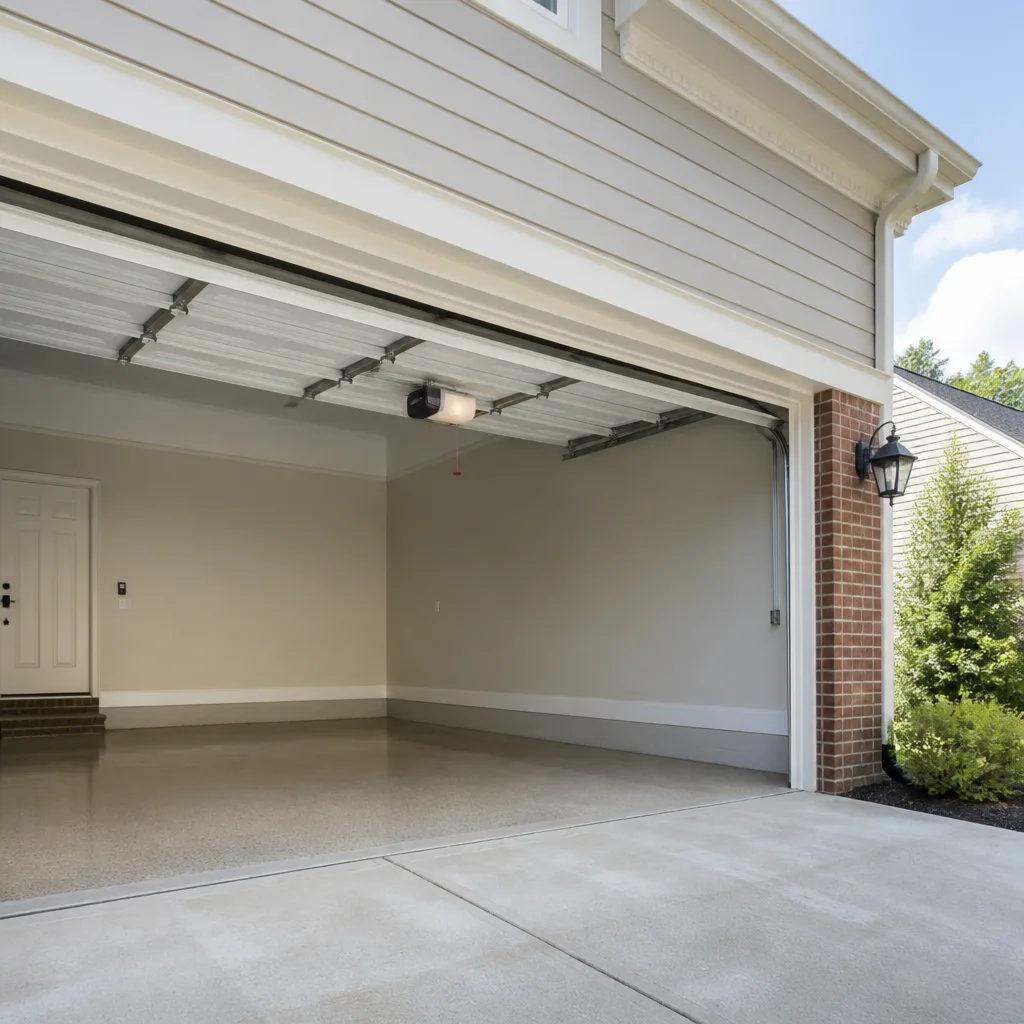
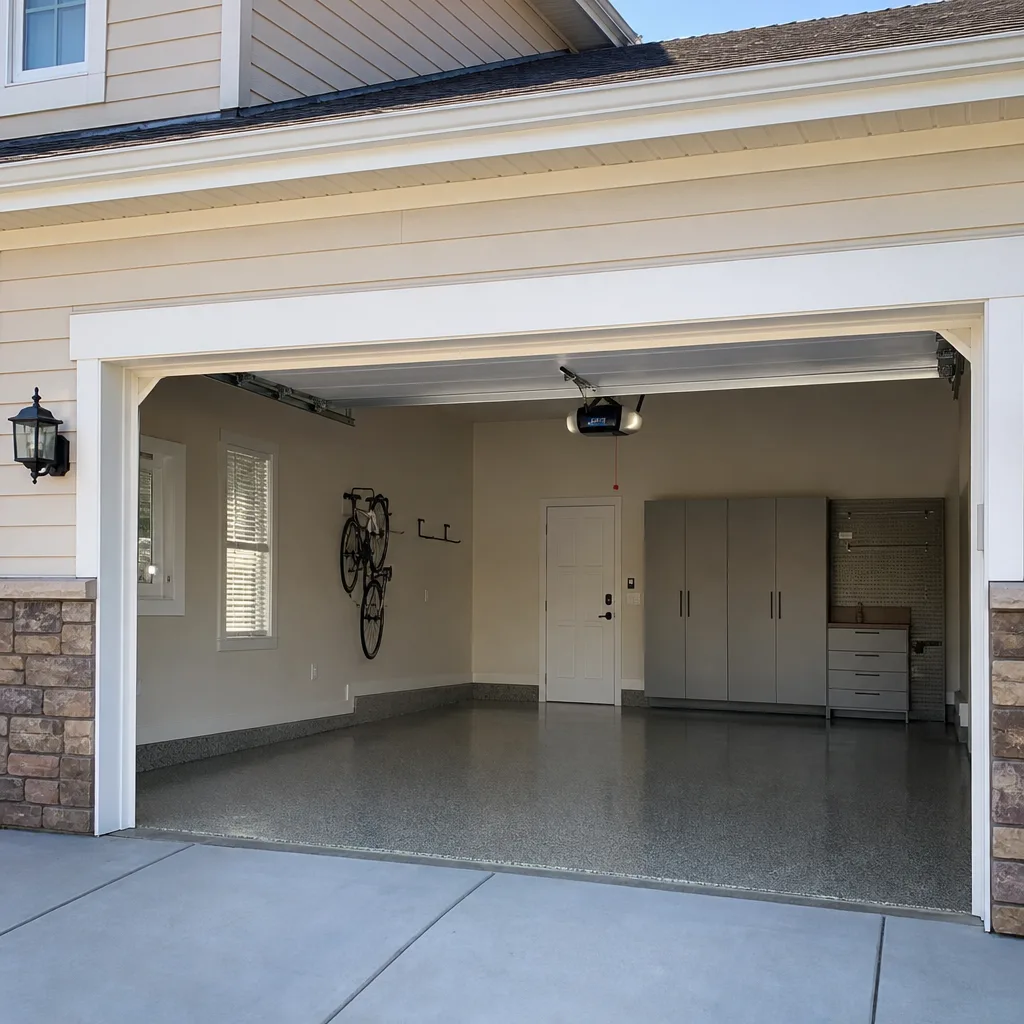
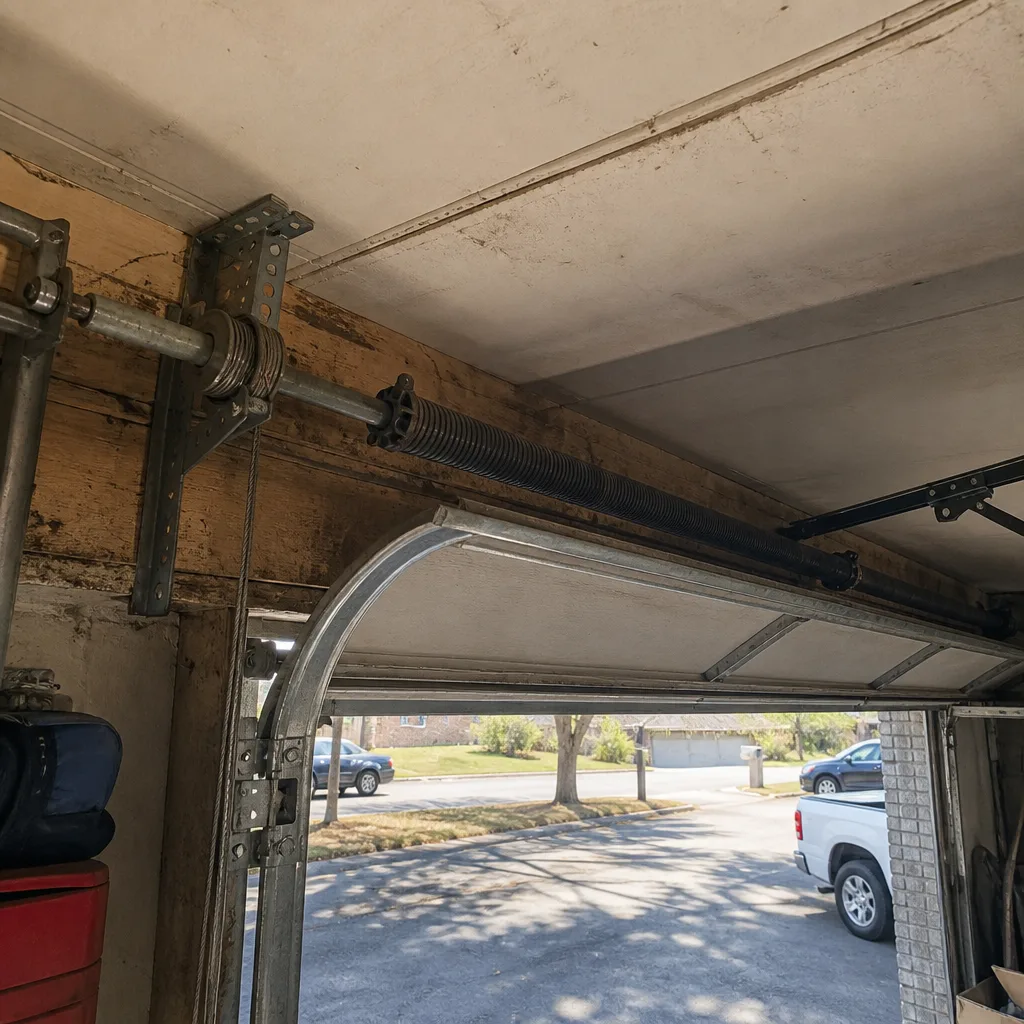 Before
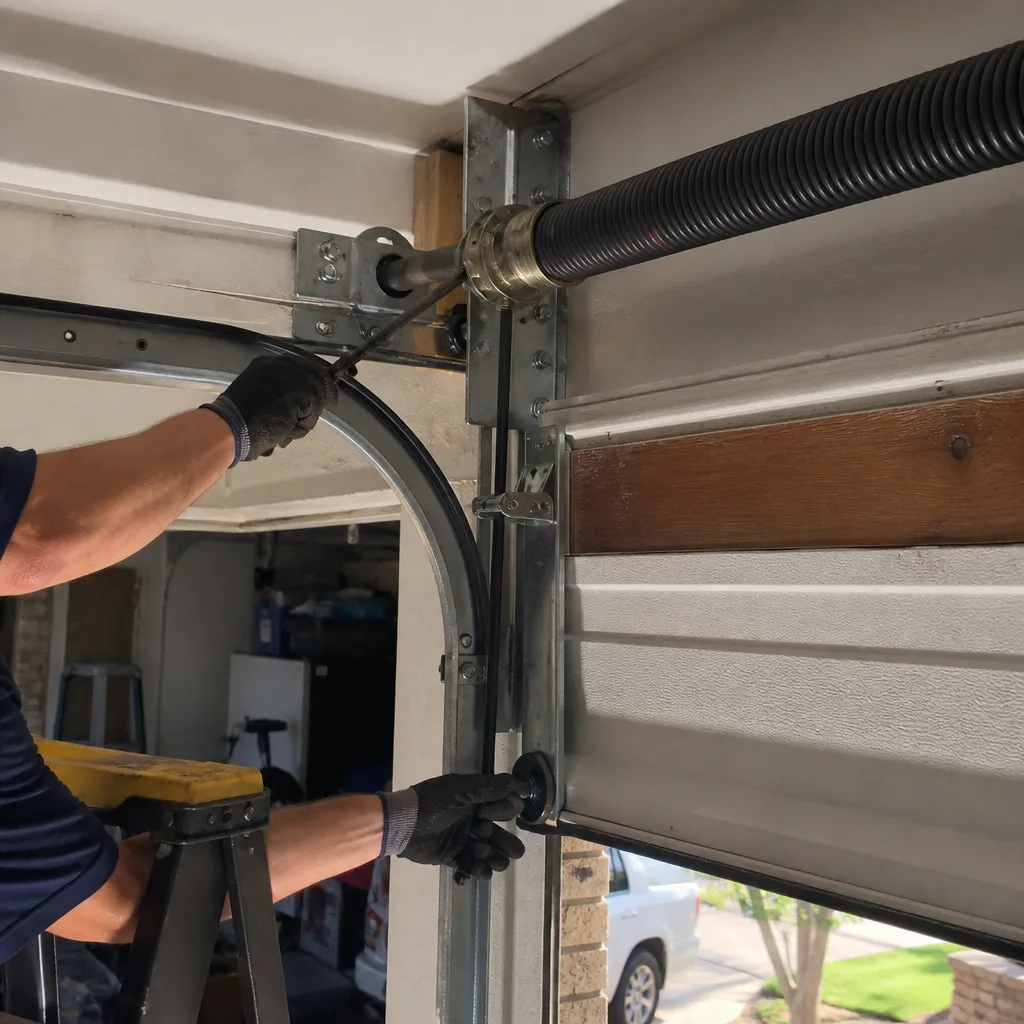 After
After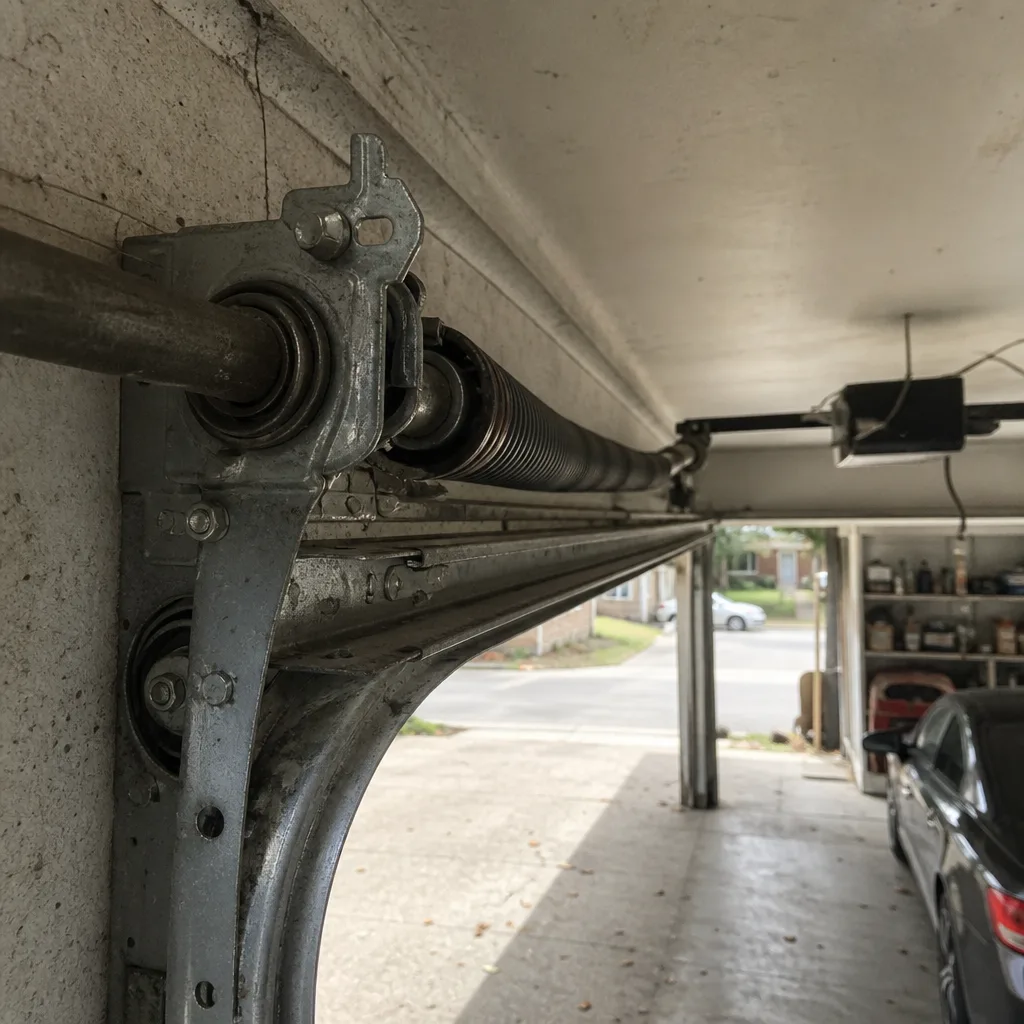 Before
 After
After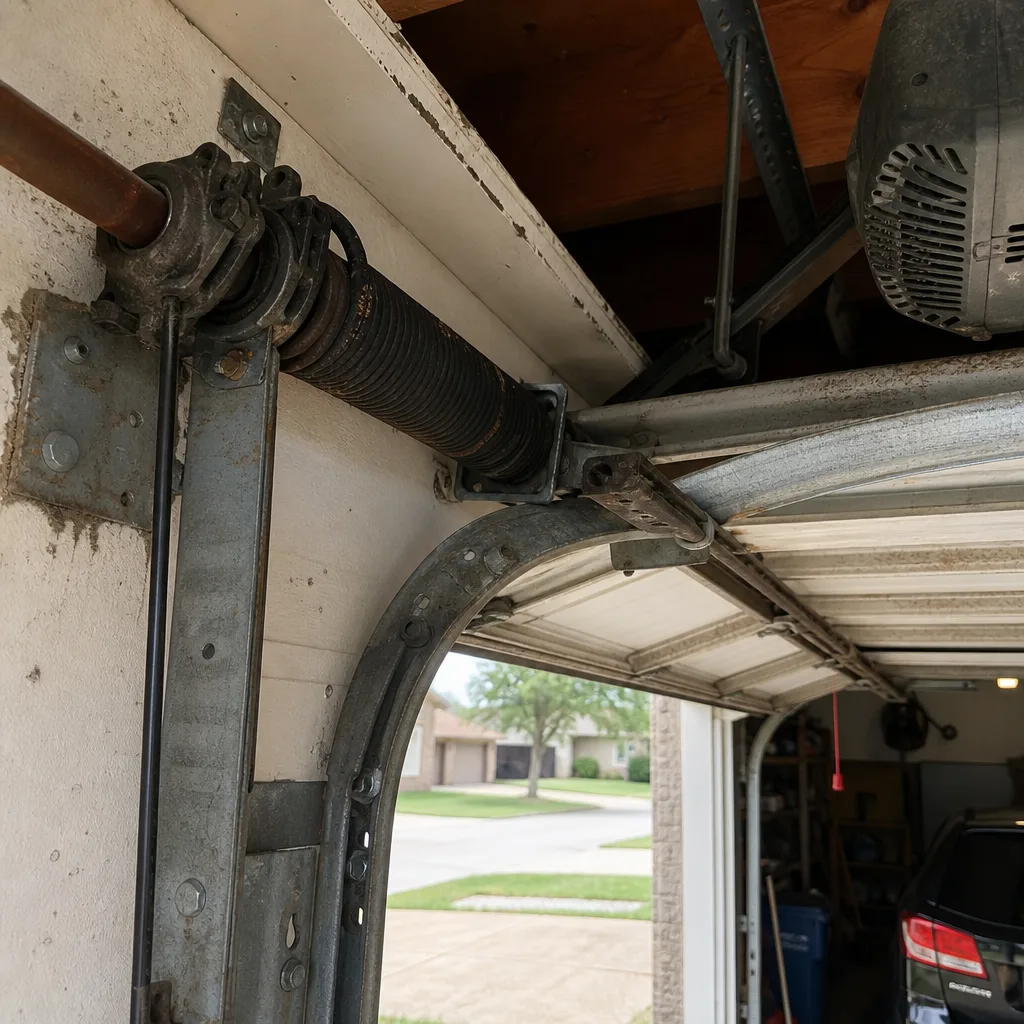 Before
 After
AfterSeasonal Garage Door Care for Coppell: Year-Round Homeowner’s Guide
A garage door lubricated in January for a Minnesota winter and a Coppell winter will perform very differently by July. The grease rated for cold climates turns to drag in 100-degree heat, accelerating wear instead of preventing it. Most seasonal maintenance guides fail North Texas homeowners because they assume four equal seasons; Coppell’s reality is long punishing summers, brief violent springs, and unpredictable winter ice events, each attacking a different part of the door system. In this guide, we’ll match the maintenance task to the actual local season, explain why thermal expansion in steel doors demands annual opener recalibration, and show you the five-minute pre-storm check that protects against Coppell’s hail and wind damage. For a deeper dive, see The Complete Guide to Garage Door in Coppell. You’ll learn when to handle a task yourself and when the risk warrants calling a trained technician.
Quick Answer
Seasonal garage door care in Coppell means pre-summer seal checks before clay soil heaving creates permanent gaps, annual travel-limit recalibration for thermal expansion during June through September, a five-minute pre-storm inspection before hail season, and winter ice-seal monitoring to prevent opener burnout. Spring tension should be verified by cycle count, not calendar date. Most homeowners can handle visual inspections and lubrication; spring, cable, and opener electrical work should be left to professionals. See our DIY vs Professional Garage Door: The Coppell Homeowner’s Decision Guide for help drawing the line.
Table of Contents
- Why Coppell’s Climate Breaks the Four-Season Model
- Pre-Summer (April): Seals, Soil, and the Spring Heave Cycle
- Summer (June-September): Thermal Expansion and Opener Limits
- Pre-Storm Prep: The Five-Minute Hail and Wind Check
- Fall (October-November): Transition Inspection and Hardware Torque
- Winter (December-February): Ice Bonding and Opener Protection
- Spring Tension: Why Cycles Beat Seasons
- What You Can Handle and What You Shouldn’t
Why Coppell’s Climate Breaks the Four-Season Model
Standard garage door maintenance calendars assume roughly equal quarters of cold, warming, hot, and cooling. Coppell sits at 32.96 degrees north latitude on the Blackland Prairie, where the climate delivers something else entirely: a nine-month warm season, a six-to-eight-week volatile spring, and a winter that can produce single-digit nights followed by 70-degree afternoons.
The local soil compounds everything. Coppell’s clay-heavy ground, typical of Denton County’s Blackland Prairie, expands and contracts dramatically with moisture. Spring rains saturate the clay, causing upward heave that shifts concrete garage slabs and alters door alignment. By late June, the clay has baked hard and shrunk, sometimes creating gaps that didn’t exist in April. A maintenance schedule built for sandy-loam regions misses this entirely.
Summer heat in Coppell routinely pushes attic and garage temperatures above 120 degrees. Steel door panels expand in their tracks. Nylon rollers soften. Grease thins and migrates downward, leaving upper hinges dry by August. Meanwhile, winter’s brief severity brings ice events that bond rubber seals to concrete, a failure mode rare in true northern climates where sustained cold keeps snow powdery rather than melty.
We’ve been serving Coppell and neighboring communities since 2016, and we’ve learned that matching the task to the actual local stressor prevents more callbacks than any generic quarterly checklist. The sections below follow Coppell’s real seasonal pattern, not a template from another region.
Pre-Summer (April): Seals, Soil, and the Spring Heave Cycle
April is the critical window in Coppell. The spring rains have saturated the clay soil, causing maximum heave. Your garage slab may have risen a quarter-inch or more since January. By July, that slab will settle back, but if your bottom seal was compressed or damaged during heave, it won’t recover. You’ll have a permanent gap that admits dust, pests, and conditioned-air loss through the hottest months.
Here’s what to check before the soil dries and locks in any damage:
- Inspect the bottom seal with the door closed. Look for daylight visible underneath, especially at the corners where slab irregularities first appear. In Coppell’s older neighborhoods like Old Town Coppell and the original ranch-style homes along Bethel School Road, slab settlement patterns are well-established and predictable.
- Run your hand along the seal’s face. Feel for cracks, hardening, or flat spots where the seal has taken a set from winter cold or spring compression. EPDM rubber seals harden faster in North Texas UV exposure than in cooler climates.
- Check the seal retainer. The aluminum or PVC channel that holds the seal can bend during soil heave. If the retainer is distorted, replacing the seal alone won’t restore contact.
- Operate the door and listen. A seal dragging on an uneven slab produces a distinct scraping sound in spring that disappears by August. That scraping is abrading the seal and accelerating wear.
If the seal is damaged or the retainer bent, replacement before summer prevents the gap that wastes cooling dollars and admits scorpions, snakes, and field mice common to Coppell’s remaining undeveloped parcels. The garage door repair in Coppell page covers seal types and replacement options.
For lubrication in April, switch to a synthetic grease rated for 0 to 300 degrees Fahrenheit. Standard lithium greases formulated for northern winters will thin and run by June, leaving steel hinges dry and noisy. Apply sparingly to hinge pins, roller bearings, and the top of the rail where the trolley travels. Wipe excess; in Coppell’s dust, over-greasing attracts grit that acts as grinding compound.
Summer (June-September): Thermal Expansion and Opener Limits
North Texas summer is the longest, most punishing season for garage door systems. From June through September, garage temperatures in Coppell regularly exceed outdoor readings by 20 to 30 degrees. A steel door that measured 16 feet wide at 6 a.m. may measure 16 feet 1/8 inch by 3 p.m. That expansion changes how the door sits in its tracks and, critically, where the opener thinks the “closed” position is.
Every opener has travel limit switches that tell it when to stop moving the door up or down. These are set at installation based on the door’s dimensions at moderate temperature. When summer expansion changes those dimensions, the opener may:
- Fail to fully close the door, leaving a gap that defeats security and climate control
- Drive the door too hard into the closed position, stressing the opener’s motor and the door’s top section
- Reverse prematurely, interpreting the extra resistance from expanded panels as an obstruction
We verify and adjust travel limits on every summer service call in Coppell. The adjustment is simple on most LiftMaster, Chamberlain, and Craftsman chain-drive and belt-drive units: two white plastic screws on the opener housing, marked “up” and “down.” A quarter-turn typically corrects for seasonal expansion. But the procedure varies by model year, and misadjustment can cause the door to close with dangerous force or fail to reverse on obstruction.
Summer maintenance checklist for Coppell:
- Test force sensitivity monthly. Place a 2×4 flat on the floor where the door closes. The door should reverse on contact. If it doesn’t, the force setting needs reduction. This is especially important in summer when expanded panels increase closing resistance.
- Inspect rollers for deformation. Nylon rollers soften in sustained heat. Look for flat spots or cracking. Steel rollers won’t deform but their bearings dry faster; listen for squeal.
- Check opener motor housing temperature. If the housing is too hot to touch comfortably after a cycle, the motor is working harder than designed. Thermal expansion may be the cause, or the door may need spring tension adjustment.
- Clear photo-eye alignment. Summer dust storms and insect activity in Coppell can obscure or misalign the safety sensors. Clean lenses with a dry cloth; check that both indicator LEDs are steady.
The garage door opener in Coppell page details force-setting procedures and opener replacement options when adjustment reaches its limit.
Pre-Storm Prep: The Five-Minute Hail and Wind Check
Coppell sits in Tornado Alley’s southern edge and receives multiple severe thunderstorm warnings annually, typically March through June but increasingly into November. Hail larger than golf balls fell in Denton County in 2023, and wind events above 70 mph are not rare. A garage door is the largest moving surface on most homes and the most vulnerable to pressure differential damage.
The five-minute check before a warned storm:
- Disconnect the opener and operate manually. The door should move smoothly and stay at any position you leave it. If it drifts, the spring balance is off, and the opener will strain against wind pressure.
- Inspect the weatherstripping on the stop molding. The flexible seal between door edges and frame prevents wind from pressurizing the garage. Gaps here allow wind to push the door inward, stressing hinges and rollers.
- Check the emergency release. Ensure the red handle moves freely and the trolley re-engages properly. If power fails during a storm, you may need manual operation.
- Clear the floor track of debris. Leaves, gravel, and children’s toys prevent full closure and create entry points for wind-driven rain.
- Verify the opener’s surge protection. A direct hit or near-miss lightning strike in Coppell’s exposed terrain can fry circuit boards. If your opener lacks built-in protection, unplug it when lightning is within five miles. This is the single most common cause of post-storm opener failure we see.
After any severe event, run the door through a full cycle and listen. Grinding, popping, or new vibration indicates damage that worsens with continued use. Mainspring Garage Door Co. home has our emergency contact for post-storm assessment.
Fall (October-November): Transition Inspection and Hardware Torque
October and November in Coppell are the most pleasant weeks of the year, which makes them easy to waste. The door that labored through summer now operates in mild temperatures, hiding developing problems. This is the season to address accumulated wear before winter’s brief severity tests the system.
Hardware torque is the critical fall task. Summer’s thermal cycling loosens fasteners more aggressively than steady cold. Steel expands and contracts daily; each cycle slightly backs off nuts and bolts. By October, hinge screws may be finger-loose, and track mounting brackets may have shifted.
Check these with a socket wrench, not a screwdriver:
- Hinge bolts at every panel joint. Snug, don’t overtighten; the nylon-insert lock nut should resist but turn.
- Track mounting brackets to the header and vertical framing. In Coppell’s newer construction, especially the builds from 2015 onward in Cypress Waters and the northern subdivisions, header framing is often engineered lumber that holds fasteners differently than solid pine. Check for pull-out.
- Spring anchor bracket and cable drums. These carry full spring tension and must be secure. If you find looseness here, stop and call a technician. These components are under lethal tension.
- Opener rail mounting to the header bracket. Summer vibration loosens lag screws in header wood.
Fall is also the time to inspect weatherstripping before winter. The bottom seal you checked in April has now seen six months of heat and UV. If it’s hardened or cracked, replace it before December ice events. The side and top stop molding seals are often overlooked; they prevent wind infiltration and reduce the stack effect that pulls conditioned air from your house into the garage.
Our $89 Seasonal Tune-Up includes full hardware torque verification, spring tension check, and weatherstripping inspection. Most appointments in fall are completed in a single visit with the parts on our truck.
Winter (December-February): Ice Bonding and Opener Protection
Coppell winters are mild by national standards and brutal by local equipment standards. The region’s freeze events are brief, wet, and unpredictable. Temperatures drop below freezing for 24 to 48 hours, often with rain or fog that wets the bottom seal, followed by rapid warming that melts the ice. This specific pattern causes more opener failures in Coppell than sustained cold ever could.
The failure mode is ice bonding. Water seeps under the seal or condenses on the concrete floor. When temperatures drop, the rubber seal freezes to the slab. The homeowner presses the opener button. The motor strains against the bonded seal. If the opener’s force setting is high enough, it rips the seal or damages the bottom door section. If the force setting is correct, the motor stalls and may overheat or trip its thermal protector. Repeated attempts burn out the motor or strip the nylon gear.
We’ve replaced more opener motors in January and February for this cause than for all other winter failures combined. The prevention is simple:
- Before predicted freeze, ensure the seal is dry and the floor drains. Clear leaves from any garage floor drain. Squeegee standing water.
- Apply silicone spray to the seal face. A light coating prevents ice adhesion without attracting dust.
- If the door is frozen shut, do not use the opener. Disconnect the trolley and lift manually, or use a hair dryer on the seal area. Forcing the opener is what causes the damage.
- After any ice event, inspect the seal for tears or deformation. A damaged seal admits more water, creating a repeat cycle.
Winter in Coppell also brings another risk: the homeowner who “tunes up” the door as a New Year’s project and sprays standard lubricant on everything. In cold conditions, thick grease increases starting resistance. The opener works harder, and the thermal protector may trip. Use only light synthetic lubricant in winter, applied sparingly to hinges and rollers. Never lubricate the track itself; the rollers need friction to turn, and oily tracks collect grit.
The 90-Day Done Right Promise covers any winter service we perform. If the door doesn’t operate as expected after our visit, we return at no charge. No paperwork, no dispute.
Spring Tension: Why Cycles Beat Seasons
Every garage door spring has a rated cycle life, typically 10,000 cycles for standard springs and 25,000 or 50,000 for high-cycle upgrades. A cycle is one full open-and-close. The spring doesn’t know what month it is; it knows how many times it has been asked to lift the door’s full weight.
Despite this, many homeowners and some service providers tie spring replacement to calendar maintenance. “Replace every seven years” is common advice. For a door used twice daily, that’s roughly 5,000 cycles. For a door used by a family with teenagers and multiple vehicles, seven years might mean 15,000 cycles. The calendar approach fails both ways.
Estimate your cycles:
- Two-car household, both adults commute, door used morning and evening: 4 cycles/day = 1,460/year. Standard spring lasts 6-7 years.
- Family with school-age children, multiple activities, garage as primary entry: 8-10 cycles/day = 3,000+/year. Standard spring lasts 3 years.
- Retired couple, one vehicle, door used occasionally: 1-2 cycles/day = 550/year. Standard spring might last 15 years, but rust and metal fatigue still apply.
In Coppell’s humidity, especially for doors facing south or west with afternoon sun and dew cycles, rust accelerates spring failure regardless of cycle count. Visual inspection for rust coating, gaps between coils when the door is open (indicating loss of tension), and oil staining from previous lubrication all signal need for professional evaluation.
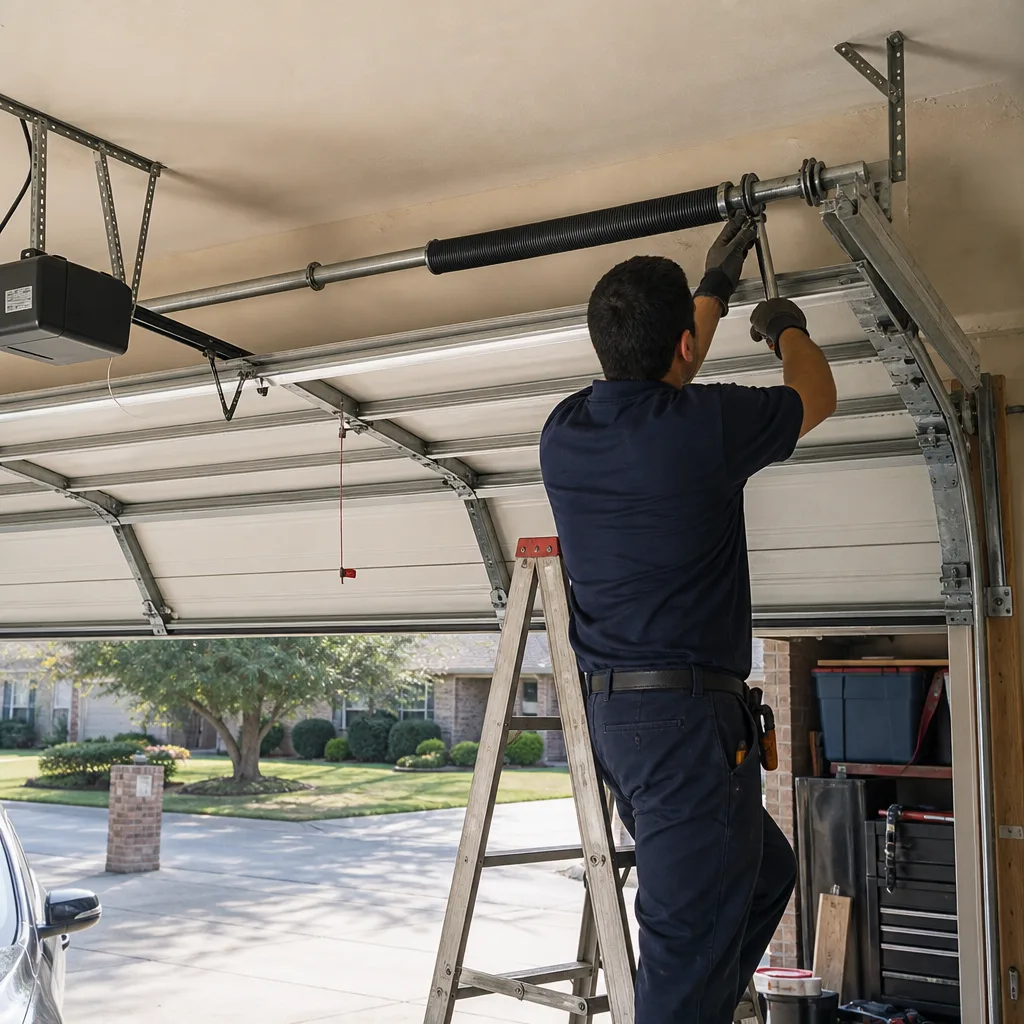
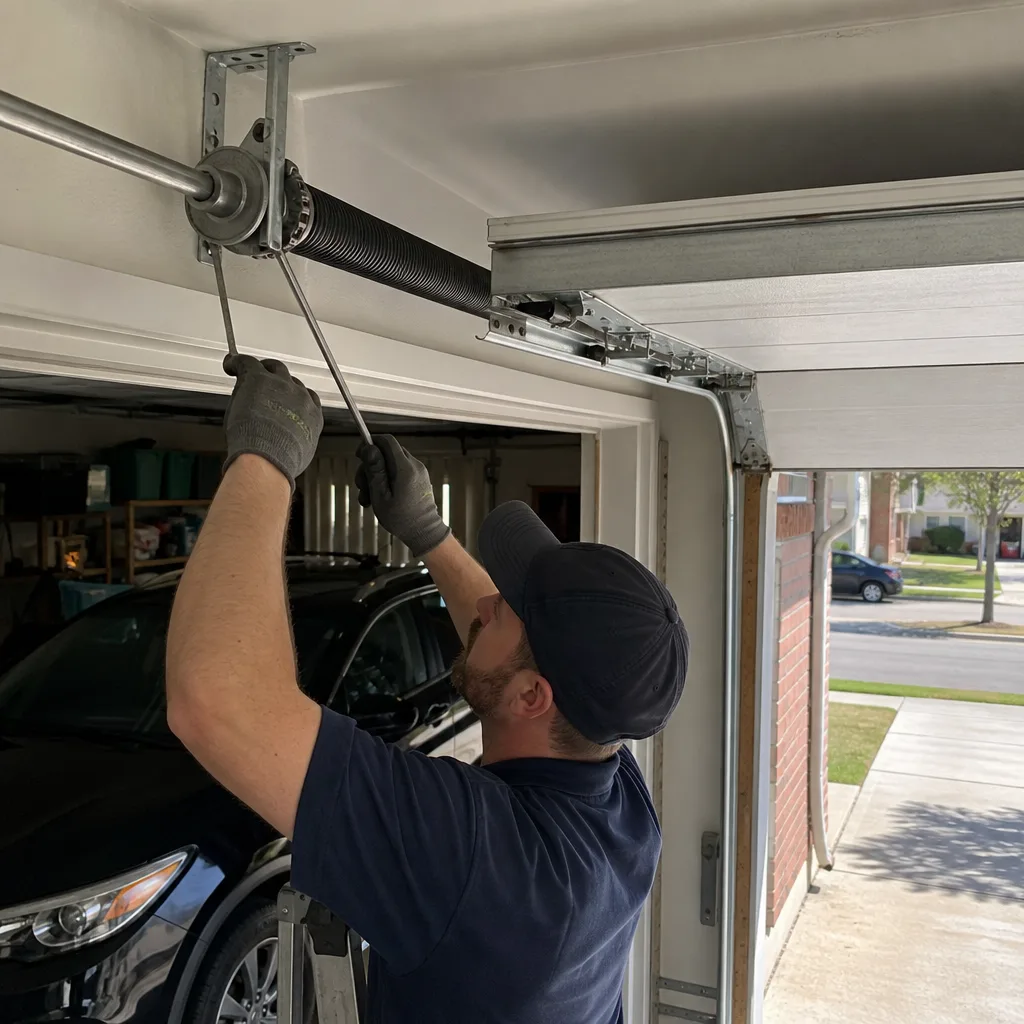
Spring tension verification requires winding bars inserted into the cogs of a torsion spring system. The stored energy is sufficient to cause serious injury or death. We do not recommend homeowner adjustment. Our technicians carry calibrated scales and measure actual door weight against spring torque. If the door feels heavy to lift manually or drifts downward when stopped mid-travel, the springs are weak and the opener is compensating. This burns out the opener prematurely.
The garage door installation in Coppell page covers high-cycle spring upgrades for heavy-use households.
What You Can Handle and What You Shouldn’t
Homeowners in Coppell are capable and self-reliant, but garage door systems contain genuinely dangerous components. The boundary between safe DIY and professional-only work is clear when you understand the energy stored in the system.
Safe for most homeowners:
- Visual inspection of springs, cables, rollers, and hardware
- Lubrication of hinges, roller bearings, and opener rail with appropriate product
- Photo-eye cleaning and alignment verification
- Weatherstripping replacement (bottom seal, stop molding)
- Manual operation test and balance check
- Remote battery replacement and keypad programming
Professional-only, no exceptions:
- Spring adjustment or replacement. Torsion springs store enough energy to lift 150-400 pounds; release without proper tools and training causes severe injury.
- Cable replacement. Cables are under full spring tension and can whip unpredictably when detached.
- Opener electrical work, including circuit board replacement and wall-button wiring. Garage door openers are 120V devices in wet locations; code requirements apply.
- Track realignment after impact or hardware failure. Improperly secured tracks allow door drop.
- Panel replacement on sectional doors. Panels are interconnected and under spring load even when the door is closed.
We’ve responded to homeowner injuries in Coppell and across our service area that resulted from well-intentioned maintenance attempts. The flat price we quote before starting work includes the training, tools, and insurance that make the job safe. It’s a square deal because no one gets hurt.
Common Mistakes to Avoid
- Using WD-40 as a lubricant. WD-40 is a solvent and water displacer, not a lubricant. It strips existing grease and leaves metal unprotected. Within two weeks in Coppell’s dust, hinges will grind audibly.
- Lubricating the track. Rollers need to turn in the track; lubricated tracks allow sliding instead of rolling, which flat-spots nylon rollers and accelerates wear.
- Ignoring the manual operation test. If you never disconnect the opener and lift by hand, you won’t know the springs are weakening until the opener fails. Test quarterly.
- Adjusting opener force settings without checking door balance first. A heavy door will always trigger excessive force. The root cause is spring tension, not opener calibration.
- Waiting for noise before acting. Grinding, popping, and squealing are late symptoms. By the time a Coppell homeowner hears the problem, secondary damage to hinges, rollers, or the opener is likely.
- Using the emergency release improperly. Pulling the red handle with the door open allows uncontrolled descent. Pull only with the door closed, and stand clear of the door path.
When to Call a Professional
Call when the door makes new noise, moves unevenly, reverses unexpectedly, or feels heavy to lift manually. Call before a seasonal transition if you haven’t had professional service in twelve months. Call immediately if a spring is broken, a cable is frayed, or the door has been struck by a vehicle or debris.
Carl Dutton and the team at Mainspring Garage Door Co. offer free estimates in Coppell. We’ll inspect, diagnose, and quote a flat price before any work begins. Most repairs are completed in a single visit with the parts already on our truck. Call (972) 646-8653 to schedule, or for 24/7 emergency response when a spring breaks at 6 a.m. or a storm damages the door at midnight. A live person answers every call, including holidays.
Frequently Asked Questions
Once annually is sufficient for most Coppell homes, timed for either April (pre-summer) or October (pre-winter) to align with the most stressful seasons. Heavy-use doors or those with high-cycle springs should be inspected every six months. Call (972) 646-8653 to schedule our $89 Seasonal Tune-Up.
Thermal expansion of steel door panels increases resistance in the tracks, and summer-thinned grease no longer protects hinges. The opener’s travel limits and force settings, calibrated at moderate temperature, are now out of spec. Annual summer recalibration prevents this.
Do not use the opener. Disconnect the trolley and attempt manual lift, or apply gentle heat with a hair dryer to the bottom seal area. Forcing the opener against ice bonding burns out the motor or rips the seal. If the door won’t release, call for service.
Our Seasonal Tune-Up is $89 and includes full inspection, hardware torque verification, spring tension check, lubrication, safety system test, and weatherstripping evaluation. Repairs identified during tune-up are quoted upfront with our $50 Off Any Repair Over $250 offer applied if applicable. Seniors and veterans receive a permanent 5% discount.
Yes, if the retainer channel is straight and the seal type matches. Most Coppell homes use a T-style or bulb seal in an aluminum retainer. Measure the width precisely, purchase the correct profile, and work with the door partially open for access. If the retainer is bent or the seal type is unclear, we carry all common profiles and install same-day.
Disconnect the opener and lift the door manually to waist height. A properly balanced door should stay in place or drift slowly. If it falls heavily or is difficult to lift, the springs are weak. Visual rust, gaps between coils when the door is open, or any broken strand in a torsion spring requires immediate professional replacement. Do not attempt spring work yourself.
The Bottom Line
Coppell’s climate demands a maintenance calendar built for long summers, volatile springs, and unpredictable winter ice, not a generic four-season template. Check seals before the clay soil locks in summer gaps. Recalibrate opener limits for thermal expansion. Run the five-minute pre-storm check when severe weather threatens. Monitor for ice bonding in winter, and verify spring condition by cycle count, not calendar date. Handle lubrication, inspection, and weatherstripping yourself. Leave springs, cables, and electrical work to trained technicians. Consistent, season-matched care prevents the emergency calls that always seem to come at the worst possible hour. Explore more guides & resources to keep your door running year-round.
Written by Carl Dutton, Owner at Mainspring Garage Door Co., serving Coppell since 2016.