
Last updated September 10, 2026
Full 25-point door and opener safety check with every visit - springs, cables, rollers, tracks, and your LiftMaster or Chamberlain opener included
You get a price before we start. It does not change when the truck arrives.
 Before
 After
After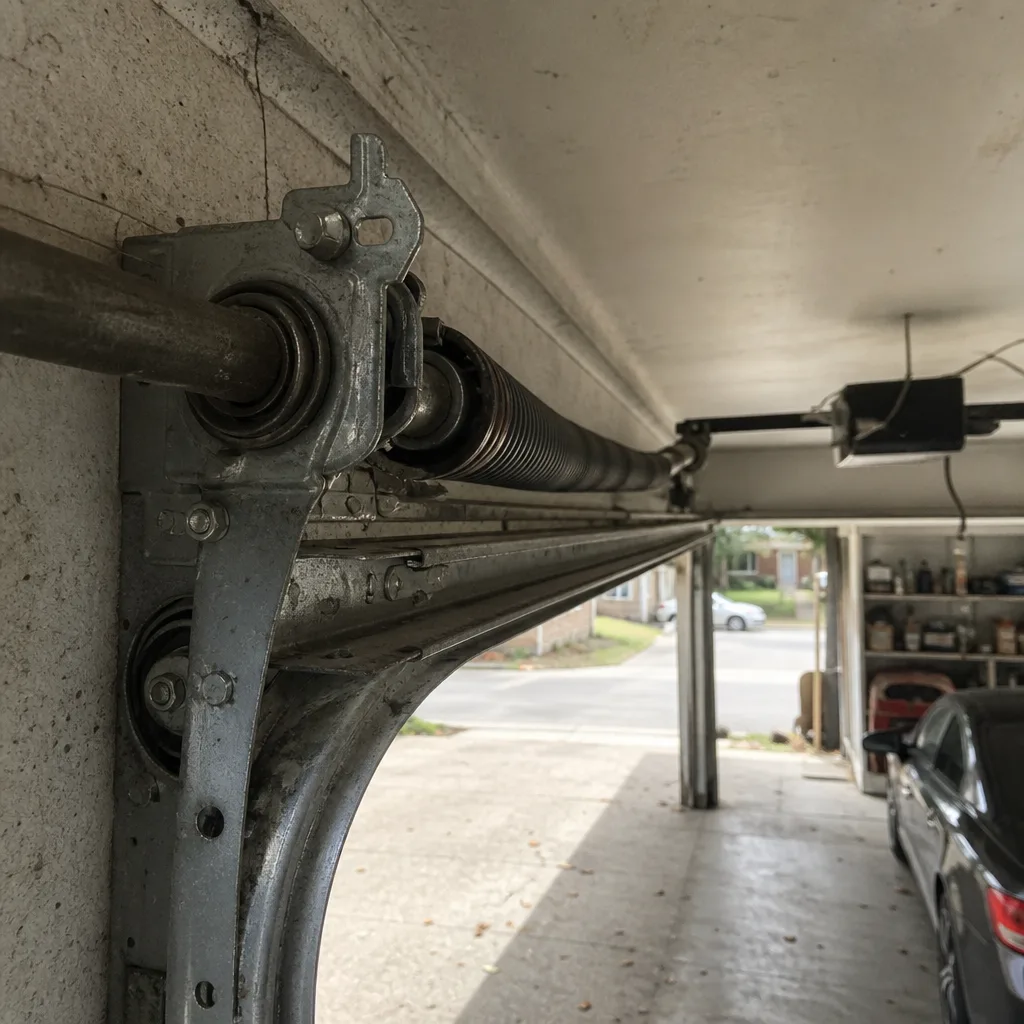 Before
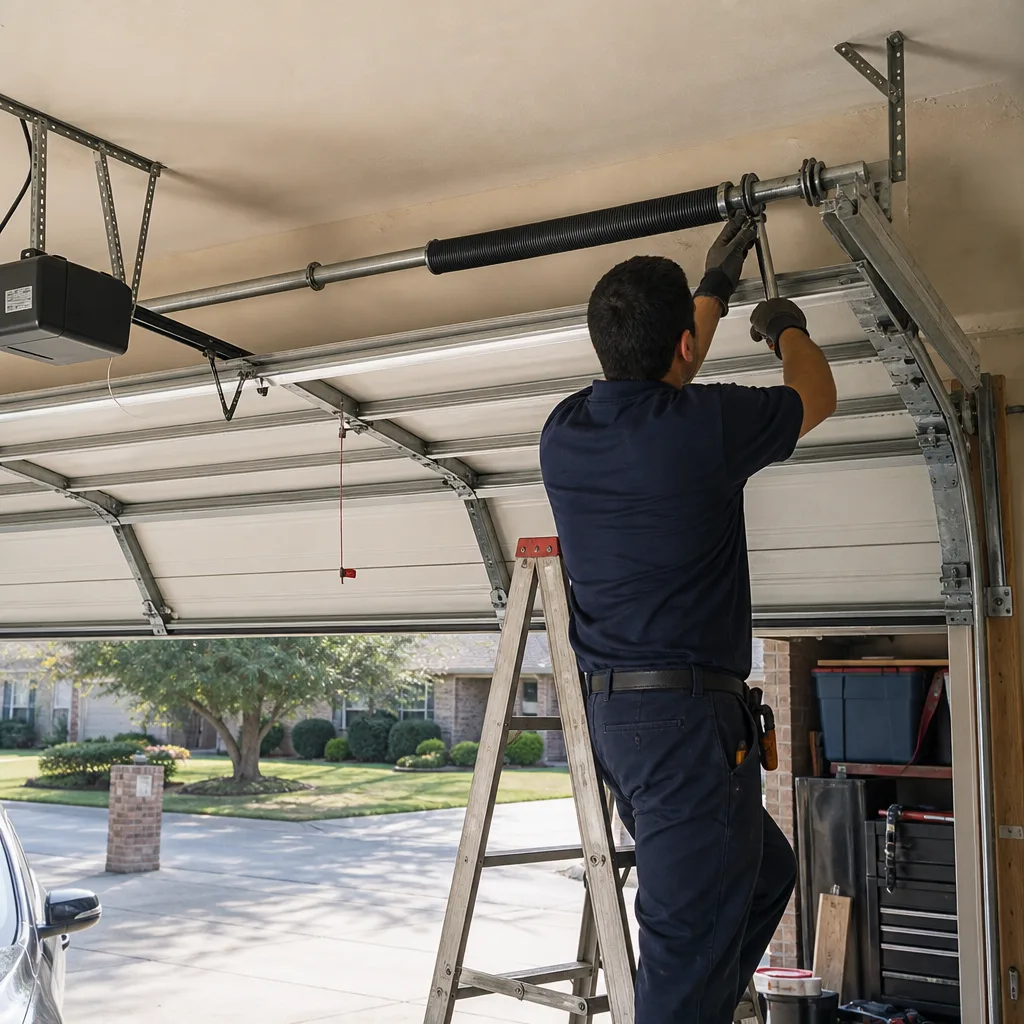 After
After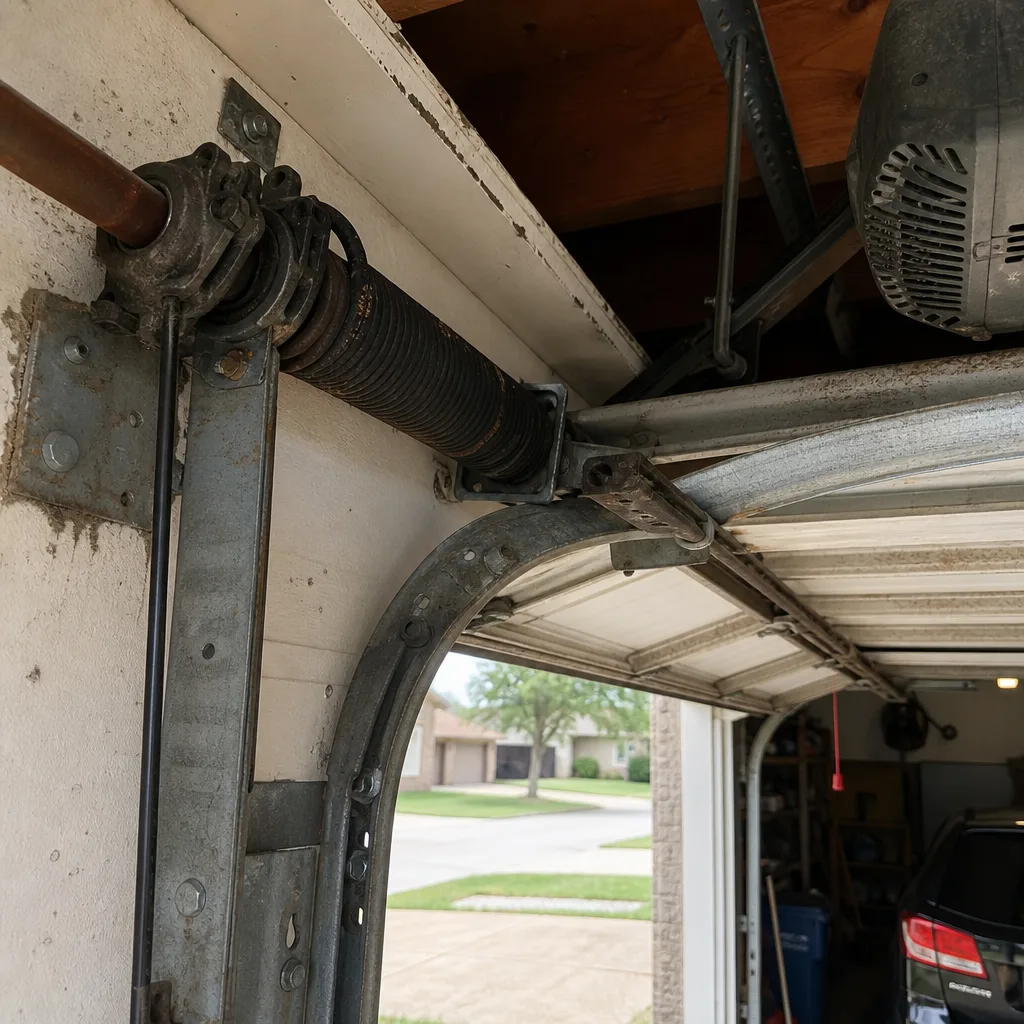 Before
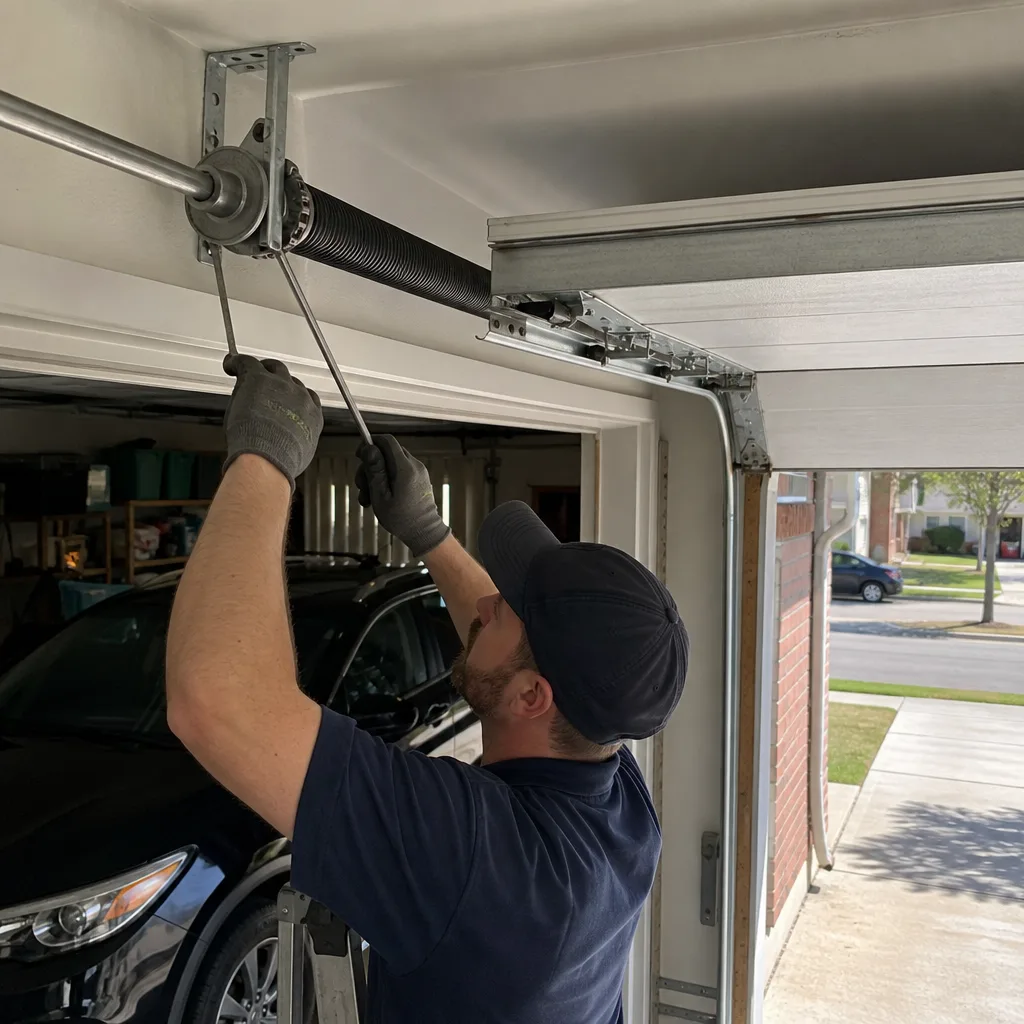 After
AfterGarage Door Repair Maintenance Checklist for Coppell Homeowners
The most common garage door service call in North Texas isn’t a broken spring or a dead opener. It’s a simple lack of lubrication that turned a $6 maintenance task into a $200 service visit. In Coppell, where summer heat pushes metal past 140 degrees and spring storms drive oak pollen into every track, a door can go from smooth to stuck in about six weeks of neglect. This checklist is built from what Mainspring Garage Door Co. sees on actual Coppell homes, organized by the season that causes each problem. Follow it once a year and your door will likely never become an emergency.
Quick Answer
A complete garage door maintenance checklist for Coppell homeowners includes four seasonal inspections: spring debris clearing and hardware tightening after storm season, summer lubrication with silicone-based products rated for Texas heat, fall balance and seal checks before the first freeze, and winter roller and sensor cleaning after freeze-thaw cycles. Perform these checks in order, document what you find, and any developing problem gets caught before you need Garage Door Repair to strand your car in the driveway.
Table of Contents
- Spring Checklist: Post-Storm Recovery and Hardware Inspection
- Summer Checklist: Lubrication and Heat Expansion Management
- Fall Checklist: Balance Testing and Seal Integrity
- Winter Checklist: Roller Function and Sensor Alignment
- Tools and Supplies for Coppell Conditions
- The Documentation System That Saves Money
- Common Mistakes to Avoid
- When to Call a Professional
- Frequently Asked Questions
Spring Checklist: Post-Storm Recovery and Hardware Inspection
March through May in Coppell brings the severe weather pattern every North Texas homeowner knows. Hail, straight-line winds, and the fine green dust of live oak and cedar pollen work into the garage door system in ways that don’t show immediately but compound fast.
Start with the tracks. Close the door and examine both vertical tracks for dents or impact marks from wind-borne debris. Even a small dent where the roller rides will cause the door to shudder and, over time, force the opener to work harder than it should. Run your finger along the inside surface; any ridge you can feel, the roller feels too. If you find damage, note the exact location for your documentation log.
Next, tighten every visible bolt and bracket. The vibration of daily operation loosens hardware over time, and spring storms add lateral stress that accelerates the problem. Focus on:
- The lag screws securing the track to the wall framing - these take the most stress during high winds
- The brackets holding the bottom roller fixtures, which see the most dirt and moisture splash
- The opener mounting bracket where it attaches to the header above the door
- The hinges between door sections, especially on older Clopay or Wayne Dalton doors common in Coppell’s 1990s-era neighborhoods
Check the weatherstripping on the exterior frame. Spring storms in Coppell often come with wind-driven rain that finds any gap. Look for cracks, hardening, or separation from the frame. The PVC vinyl used on most modern doors stiffens after about five Texas summers and loses its seal.
Finally, clear the photo-eye sensors. Pollen season here is serious business, and a thin film of oak pollen across the lens will cause intermittent misalignment errors that are maddening to diagnose. Wipe both lenses with a clean, dry cloth. Don’t use glass cleaner; the ammonia residue attracts more dust.
Time required: 25 minutes. Best done: the first Saturday after the last severe storm watch expires, typically mid-May.
Summer Checklist: Lubrication and Heat Expansion Management
July and August in Coppell push garage temperatures past 120 degrees. Metal expands. Grease thins. Rubber hardens. The maintenance you do in summer determines whether the door survives the thermal stress cycle that peaks in late August.
The lubrication question matters more than most homeowners realize. WD-40 is not a lubricant for this application; it’s a water displacer and light solvent that evaporates within days in Texas heat, leaving metal-on-metal contact. Worse, it attacks nitrile rubber seals and PVC weatherstripping, causing premature cracking. We’ve replaced dozens of bottom seals in Coppell that were chemically damaged by well-meaning WD-40 applications.
Use a silicone-based spray lubricant rated for high-temperature applications, or a lithium grease specifically formulated for garage door components. Apply sparingly to:
- Hinge pins: One quick spray at each pivot point. Wipe excess immediately; it attracts dust.
- Roller bearings: Only on steel rollers with exposed bearings. Nylon rollers are self-lubricating and should never be greased; the lubricant degrades the polymer.
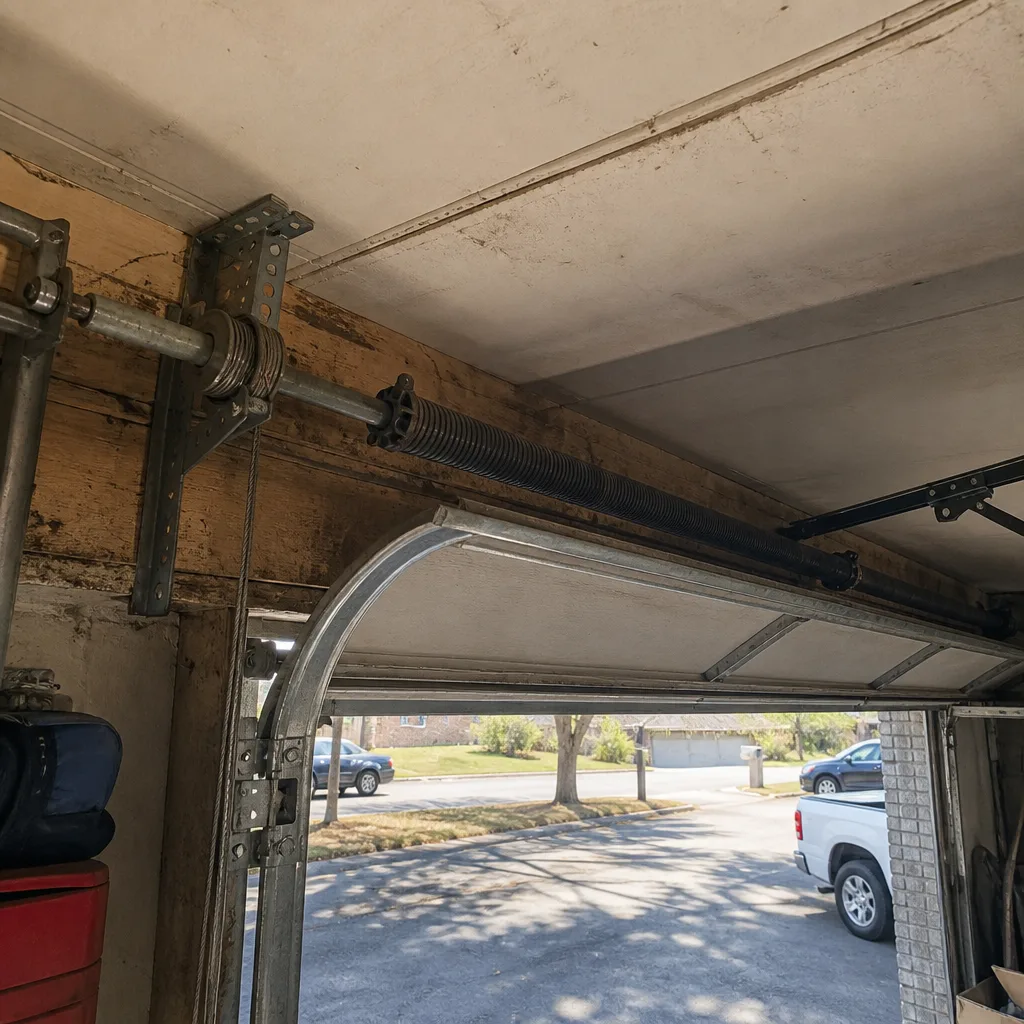
- The torsion spring: A light coat across the top surface reduces coil friction. Do not touch the spring with your hands; use the straw applicator and stand to the side. Torsion springs store lethal energy and should never be adjusted by anyone except a trained technician.
- The lock mechanism: If your door has a manual lock, a small amount of graphite or dry lubricant prevents summer humidity from corroding the internals.
Check the opener chain or belt tension. Heat expansion changes the effective length of a steel chain by small but meaningful amounts. A chain that was properly tensioned in March may be too tight by August, adding strain to the opener gear assembly. The chain should sag slightly, about half an inch at midpoint. Consult your opener manual for the specific adjustment procedure; Genie and LiftMaster units have different mechanisms.
Inspect the door panels for sun damage. South- and west-facing doors in Coppell take brutal UV exposure. Steel doors with factory finishes hold up well, but wood composite doors common in older Creekview and North Lake Woodlands homes will show surface checking and delamination after about eight years of direct exposure. Catching this early allows for spot sealing rather than full panel replacement.
Time required: 35 minutes. Best done: early morning, before the garage heats up, in late June.
Fall Checklist: Balance Testing and Seal Integrity
The balance test is the single most important check in this entire checklist. It reveals whether the torsion spring system is holding proper tension, and a failing spring gives warning signs for weeks or months before it breaks. In our experience across Coppell, springs that fail the fall balance test break before the following spring about 70% of the time.
Perform the test with the door closed and the opener disconnected. Pull the red emergency release cord to put the door in manual mode. Then:
- Raise the door manually to about waist height, approximately three feet off the floor.
- Release it smoothly. A properly balanced door will stay in place, drifting no more than an inch in either direction.
- If the door rises on its own, the spring is over-tensioned. If it falls, the spring has lost tension and is approaching failure.
- Repeat at the halfway open position and at three-quarters open. The behavior should be consistent at all points.
Any drift more than a few inches indicates the spring system needs professional attention. Do not attempt to adjust torsion springs yourself. The stored energy in a standard residential spring can cause serious injury or death if released improperly. This is not a DIY task.
While the door is in manual mode, check the seal integrity against the floor. Coppell’s black clay soil expands and contracts dramatically with moisture changes, and garage slabs settle unevenly over decades. Close the door fully and examine the gap beneath it from the inside with the lights off; daylight visible anywhere indicates a compromised seal. Common failure points are the corners, where the slab typically settles first.
The bottom seal itself should be pliable and continuous. If it’s hardened, cracked, or compressed flat, replace it before winter. Rodents seeking warmth and the first freeze-thaw cycle of water intrusion both start with a failed bottom seal. We’ve seen water damage to stored items in Coppell garages that traced directly to a $15 seal that should have been replaced in October.
Test the auto-reverse safety feature. Place a 2×4 board flat on the floor centered under the door path. The door should reverse within two seconds of contact. If it doesn’t, the force sensitivity needs adjustment. This is required by federal safety standards and protects children, pets, and vehicles.
Time required: 20 minutes for the balance test and seal check; add 10 minutes if you replace the bottom seal yourself. Best done: mid-October, before the first cold front.
Winter Checklist: Roller Function and Sensor Alignment
North Texas winters are mild compared to northern states, but the freeze-thaw cycle between December and February creates specific problems for Coppell garage doors. The critical issue is moisture that enters the system during a warm rain, then freezes overnight.
Check every roller for smooth rotation. With the door closed, manually lift each roller out of the track (on the hinge side only, never the bottom fixture) and spin it. It should turn freely with no grinding or catching. Steel rollers in older homes often develop flat spots from years of static loading in the same position; these will thump audibly when the door operates. Nylon rollers degrade differently, developing cracks that eventually cause the wheel to split. Either condition warrants replacement.
Inspect the cable system. The lift cables run from the bottom bracket to the drum at the top of the door, and they’re exposed to the most moisture in the system. Look for fraying, corrosion spots, or broken strands. A single broken strand in a cable is like a single broken wire in a tire belt: it indicates systemic fatigue and imminent failure. Do not operate the door if you find cable damage. The cable is under tension and can cause severe injury if it releases unexpectedly.
Realign the photo-eye sensors. Winter temperature swings cause subtle shifts in track and opener mounting that can knock sensors out of alignment. Both sensors should show steady indicator lights, typically green or amber depending on the brand. A blinking light indicates misalignment. Loosen the mounting bracket, adjust until both lights are steady, and retighten. The sensors must be within six inches of the floor and no more than six inches apart in height.
Test the manual release mechanism. In a power outage, which winter ice storms can cause in Coppell, you need to be able to disconnect the opener and operate the door manually. The red handle should pull smoothly and re-engage when the door is returned to the closed position and the opener is activated. If the release is stiff or doesn’t re-engage properly, the mechanism needs service before you need it in an emergency.
Time required: 30 minutes. Best done: late January, after the coldest period has passed and any freeze damage is visible.
Tools and Supplies for Coppell Conditions
The right supplies make the difference between maintenance that lasts and maintenance that needs redoing in six weeks. For Coppell’s specific climate, we recommend keeping these items on hand:
- Silicone spray lubricant: 3-IN-ONE Professional Garage Door Lubricant or equivalent rated for 0 to 300 degrees Fahrenheit. Avoid any product containing petroleum distillates on rubber or PVC components.
- Microfiber cloths: For sensor cleaning and excess lubricant removal. Paper towels leave lint that attracts dust.
- Socket set with 7/16″, 1/2″, and 9/16″ sockets: The three sizes that fit virtually all residential garage door hardware.
- Replacement bottom seal: Measure your existing seal before purchasing; T-style, bead-style, and bulb-style are not interchangeable. Most Coppell homes built 1995-2010 use a 1/4″ T-style vinyl seal.
- Level: A 24-inch level helps check track plumb during the spring inspection.
- Flashlight or headlamp: For examining cable condition and the dark corners where tracks meet the wall.
For homeowners in the older sections of Coppell near Old Town, where doors may be original to 1980s construction, add a can of rust-inhibiting spray paint. Surface rust on steel hardware is cosmetic until it isn’t, and early treatment prevents structural weakening.
The Documentation System That Saves Money
Here’s what most more guides & resources miss: the value of a simple log. When something does break, and eventually something will, your documentation lets a technician give you an accurate phone estimate and arrive with the right parts on the truck. That saves a trip charge, a diagnostic fee, and the frustration of a second visit.
After each seasonal check, record:
- The date and which checklist you completed
- Any hardware you tightened, with the specific location
- Lubricant type and application points
- Balance test result: “held position,” “drifted up 2 inches,” or “fell to floor”
- Seal condition: “good,” “hardened,” “replaced,” with the replacement part number
- Any anomalies: noises, vibrations, or visual concerns, with the date they first appeared
Keep this log in the garage, near the door button. When you call garage door repair in Coppell, read the relevant entries. A technician who knows the door has been drifting down for three months diagnoses differently than one who hears “it just broke today.” The first conversation saves everyone time and money.
We’ve been serving Coppell homeowners since 2016, and the calls that go smoothest are the ones where the homeowner can say, “The spring failed the balance test last October, and here’s how much it drifted.” That homeowner gets a precise quote over the phone and a technician who arrives expecting the specific repair.
Common Mistakes to Avoid
- Using WD-40 as a lubricant. It evaporates in Texas heat and damages rubber seals. We’ve replaced seals in Coppell homes where WD-40 was applied annually for years, accelerating rather than preventing deterioration.
- Ignoring a door that “just runs a little loud.” Excess noise is almost always metal-on-metal contact or a failing roller. Both conditions worsen exponentially; the repair cost doubles about every six months of continued operation.
- Testing the auto-reverse with a broomstick instead of a solid object. The federal test specification calls for a 2×4 laid flat because it simulates the resistance of a small child. A broomstick flexes and gives false confidence in the safety system.
- Applying lubricant to the track itself. Rollers need lubrication on their bearings, not the track surface. Greased tracks collect dust and grit that accelerates wear on both rollers and the opener drive system.
- Skipping the balance test because the door “seems fine.” Spring fatigue is invisible until it isn’t. The balance test catches gradual tension loss that precedes catastrophic failure by months.
- Using the wrong bottom seal for the retainer. T-style, bead-style, and bulb-style seals are not interchangeable. Forcing the wrong profile damages the retainer and creates gaps that vermin exploit.
- Delaying service after finding cable fraying. A frayed cable is a failed cable that hasn’t broken yet. Operating the door with damaged cables risks the door falling freely if the cable releases, and the kinetic energy involved can destroy the door and anything beneath it.
When to Call a Professional
Some maintenance tasks are homeowner-appropriate. Others require training, tools, and the safety protocols that come with handling high-tension components. Call a professional for any of the following:
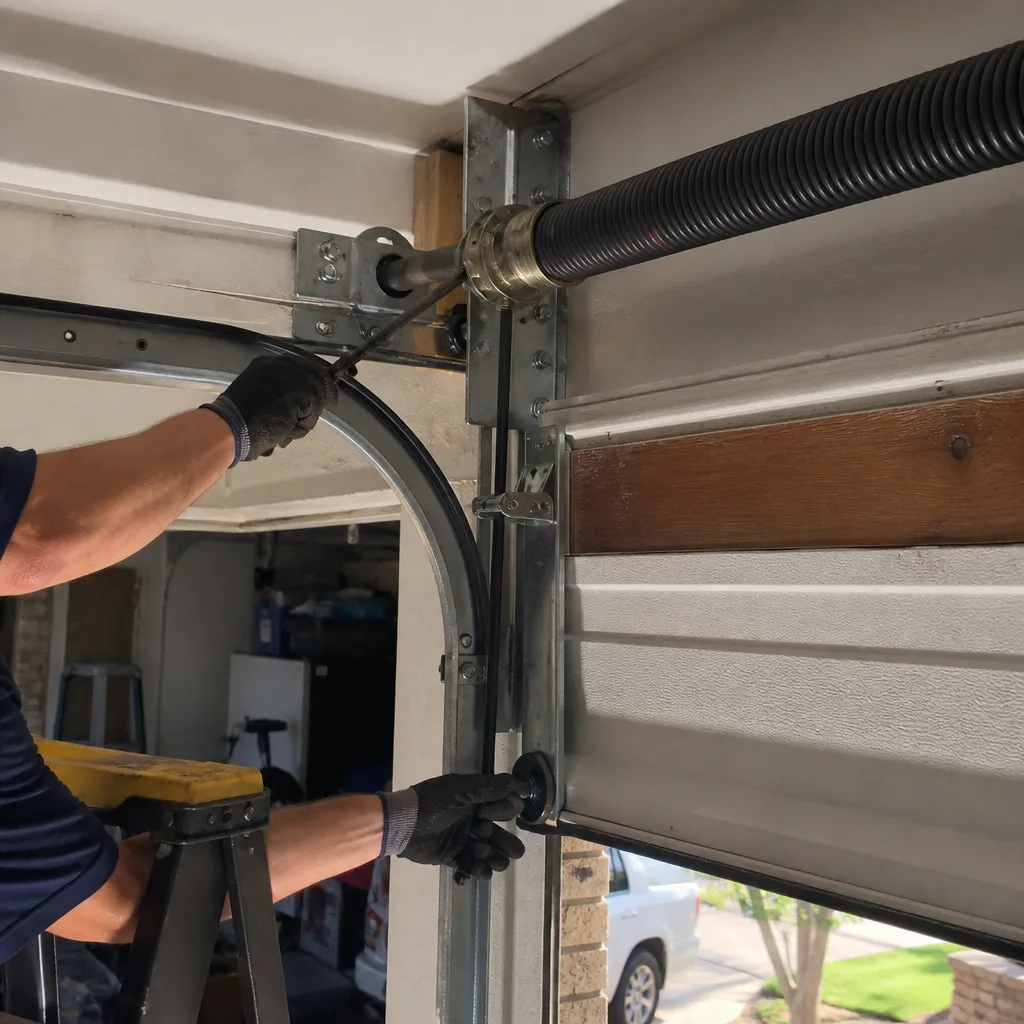
Torsion spring adjustment or replacement. The energy stored in a residential torsion spring can cause severe laceration, amputation, or death if released improperly. This is never a DIY task. Cable replacement involves similar risks and should be handled by a trained technician.
Track realignment after impact damage. Bent tracks affect door geometry in ways that stress every other component. Improper realignment causes accelerated wear and can jam the door completely.
Opener gear replacement or circuit board service. Modern openers, especially Genie and LiftMaster units with integrated safety electronics, require factory-familiar diagnosis to avoid creating new problems while solving the visible one.
Any condition where the door is stuck partially open. A door in this position is unstable and can fall without warning. Do not attempt to force it or prop it.
Mainspring Garage Door Co. offers free estimates in Coppell. Our technicians arrive with springs, cables, rollers, and openers on the truck, and most repairs are completed in a single visit. Call (972) 646-8653 to schedule, or to discuss anything you found during your seasonal inspection.
Frequently Asked Questions
A professional seasonal tune-up in the Coppell market typically runs $89 to $150, depending on the door size and number of components requiring service. Mainspring offers a $89 Seasonal Tune-Up that includes full inspection, lubrication, balance test, safety check, and written documentation of door condition. Call (972) 646-8653 to schedule; estimates are free if additional repairs are needed.
The full four-season checklist should be completed once per year, with the summer lubrication check repeated in late August if your garage faces south or west and receives direct afternoon sun. Coppell’s thermal extremes justify this extra attention; doors in shaded or north-facing garages may follow the annual cycle alone.
No. WD-40 is a water displacer and light solvent, not a lubricant, and it evaporates within days in Texas summer temperatures. More critically, it degrades nitrile rubber and PVC seals, causing premature cracking. Use a silicone-based or lithium-based product rated for high-temperature garage door applications instead.
Heat expansion changes clearances between metal components, and thinned lubricant no longer cushions contact points. The noise is a symptom of increased friction and accelerated wear. A summer lubrication check typically resolves it; if noise persists after proper lubrication, a roller or hinge may need replacement.
The fall balance test described in this guide is the most reliable early indicator. A door that drifts down when released at waist height has a spring within 90 days of failure in most cases. Visible gaps between coils, or a spring that appears stretched compared to its original tight winding, are secondary indicators detailed in our Garage Door Warning Signs: A Coppell Homeowner’s Reference Guide. If you observe either, call for service before the spring breaks and leaves the door inoperable.
Yes. Mainspring provides the $89 Seasonal Tune-Up throughout Coppell, and seniors receive a permanent 5% discount on all services. Our technicians are background-checked and uniformed, and we call before arriving so you’re never surprised by a stranger at your door. Call (972) 646-8653 to schedule at a time that works for you.
The Bottom Line
Garage door maintenance in Coppell is not complicated, but it is specific. The heat, storms, and clay soil of North Texas create failure patterns that generic checklists miss. Follow this seasonal sequence, use the right products for the conditions, document what you find, and you’ll catch problems while they’re still small. The $6 can of proper lubricant and the 20-minute balance test prevent the emergency calls that come after dark on a Saturday. When a problem does exceed what maintenance can address, a documented history gets you faster service, accurate pricing, and a technician who arrives prepared. That’s a square deal, and it’s how we’ve done the work in Coppell since 2016.
Written by Carl Dutton, Owner at Mainspring Garage Door Co., serving Coppell since 2016.